
Industry Insights
Gym Duffel Development: Materials, Ventilation, and Odor Control by Design
A gym duffel lives with sweat, shoes, and wet towels. The material, ventilation, and compartment decisions that make a gym bag survive its own contents.
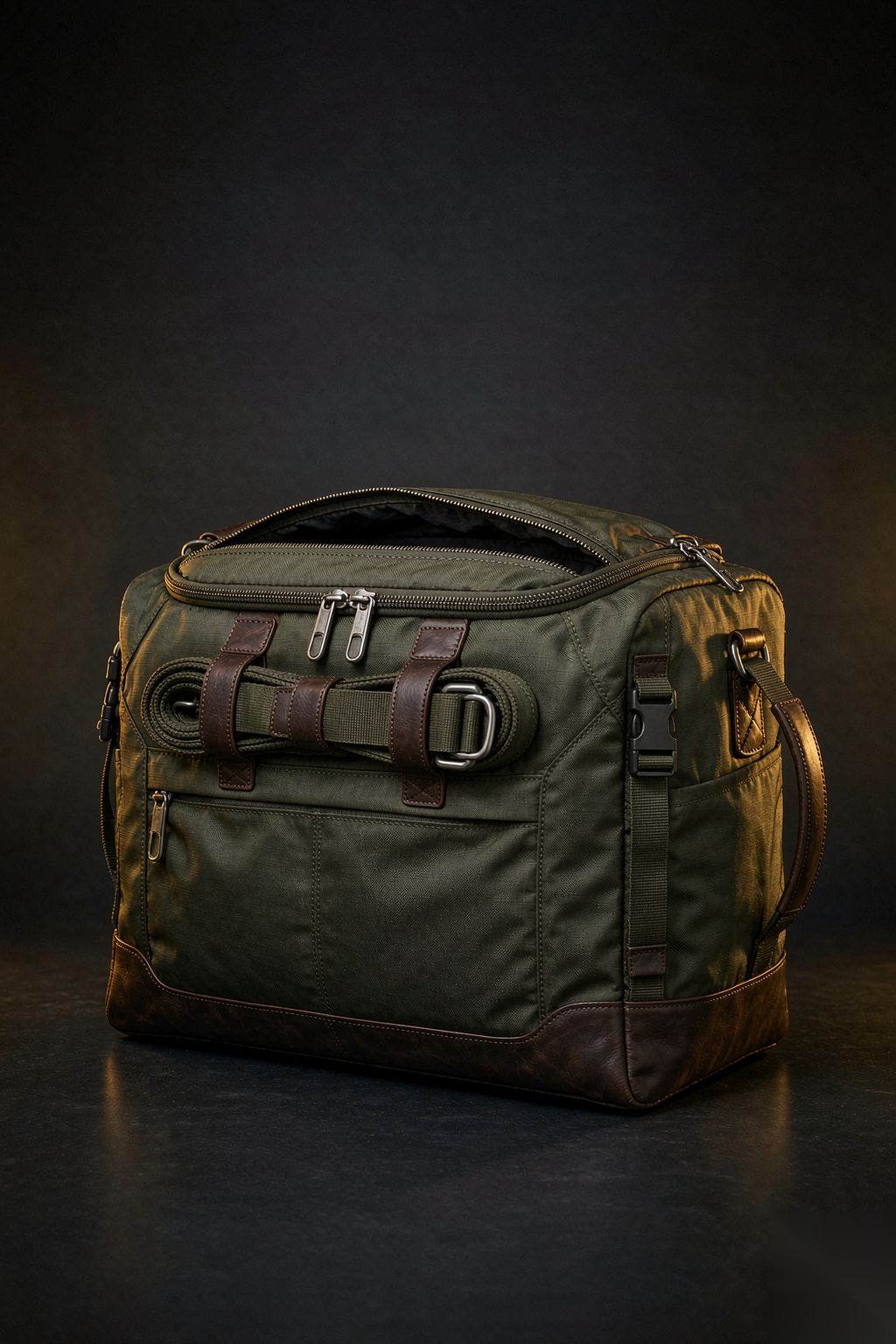
A gym duffel is the only bag whose contents are actively hostile to it: sweat-soaked clothes, damp towels, borrowed shoes, forgotten protein shakers. Gym duffel development therefore solves a problem no other bag category faces — the bag must survive an environment it is designed to contain. Material choice, ventilation architecture, and wet-zone compartment design decide whether the duffel lasts two years of membership or one season of complaints. Here is how the development actually breaks down.
The Material Decision: Abrasion Outside, Moisture Inside
A gym duffel has two material problems, one on each face:
The exterior takes abrasion — locker-room floors, car boots, gym benches, pavement. The standard answer is a mid-to-heavy denier polyester or nylon in the 600D-to-1000D class, often with a PU coating for wipeability. The coating matters more than the denier for gym use: the bag's exterior needs to wipe clean of whatever it sat in.
The interior takes moisture. Uncoated interiors absorb sweat odor and never release it. The interior face of the main compartment should be a wipeable coating as well — and the base panel, which contacts the floor and wet contents, deserves a heavier, fully waterproof layer or a removable base pad.
The classic development mistake: premium exterior, raw interior. The bag looks durable and smells permanent.
Ventilation: Architecture, Not Holes
Ventilation is the most misdeveloped feature in the category. A mesh panel is not ventilation by itself — air has to move. The ventilation architecture that actually works:
Approach | How It Works | Development Note |
|---|---|---|
Ventilation grommets | Metal eyelets in the wet compartment | Cheapest; works only with a dedicated wet zone |
Mesh wet compartment | Fully separated mesh-walled pocket for shoes/wet gear | The workhorse; mesh must be structural, not decorative |
Through-flow side channels | Air channel between lining and shell | Premium approach; adds pattern complexity |
Removable liner | Washable inner bag | Highest hygiene standard; adds a part and a zipper |
The rule: ventilation belongs where the wet things live. A gym duffel needs a dedicated wet zone — shoes or a shower compartment walled in mesh — and the rest of the bag stays dry. Mixing wet and dry contents is the complaint that kills a gym bag's reviews, and it is solved in the pattern stage, not by a grommet afterthought.
The Wet Compartment: Development Details
The wet zone carries its own mini-specification:
1. Wall material. Structural mesh over a coated backing, or TPU film windows — strong enough to hold shoes without bagging out.
2. Drainage. Two drainage grommets at the wet zone's lowest corner let condensation and dripping gear escape.
3. Zipper class. The wet-zone zipper takes moisture and constant yanking — a chunky coil with a large pull, specified for wet environments.
4. Position. End-of-bag wet zones keep moisture away from the main compartment's clothing side; base-level shoe garages use the bag's floor as their ceiling.
Hardware and Straps: The Sweat Test
Hardware on a gym duffel fails by corrosion and by grip. Metal parts should be a corrosion-tolerant finish (brushed or coated — our bag hardware guide covers the finish families), and the shoulder strap needs a non-slip pad: gym bags are carried on bare shoulders, post-workout, where smooth webbing slides.
The strap anchor points take dynamic load — people swing gym bags. The anchoring spec follows the same reinforcement logic as any load-carrying bag: box-tacks at the anchors, webbing wrapped into the structure. MOQs depend on the product and factory. Tell us what you need and we confirm what is realistic before you commit to anything — gym duffels have friendly MOQs, but the wet-zone materials carry their own minimums.
The Development Sequence
A gym duffel samples efficiently in two rounds when the sequence is right:
1. Spec sheet naming the wet zone, ventilation approach, material weights, and zipper classes — before any pattern work.
2. First sample reviewed loaded: pack it with damp towels and shoes overnight, then judge odor transfer, base stiffness, and strap comfort the next morning.
3. Correction round fixing what the overnight test found.
4. Bulk with in-line checks on the wet-zone seams and the ventilation hardware.
The overnight loaded test is the gym duffel's version of the footwear wear test — the cheapest quality control in the program. Our broader development pipeline runs the same sequence across bag categories, and the cluster sourcing guide explains why the specialist match matters for this category specifically.
Frequently Asked Questions
Is mesh alone enough for the wet compartment?
Mesh walls need structure — a pure mesh pocket bags out and lets shoes press into the dry side. Structural mesh (bonded or heavy-gauge) over a frame, or TPU windows, holds the zone's shape.
What is the best main material for a gym duffel?
A 600D-to-1000D polyester or nylon with PU coating on both faces is the working standard: abrasion outside, wipeability inside. Heavier is not automatically better — weight matters on a bag people carry to the gym daily.
Do gym duffels need antimicrobial linings?
Antimicrobial coatings exist and work, but they are a marketing layer on top of the real solution: a dedicated wet zone that dries, and an interior that wipes. Solve the architecture first.
Why does my gym bag smell permanent?
Odor lives in uncoated interior fabric that absorbed sweat. Once absorbed, it never washes out — which is why the interior coating decision is made at development, not remedied later.
The Takeaway
Gym duffel development is moisture engineering: coated faces inside and out, a ventilation architecture placed where the wet things live, and hardware that survives the sweat test. Build the wet zone into the pattern and the bag will outlast the membership.
