
Industry Insights
Inside the Heritage Luggage Line: 14 Pieces, One Development Standard
A twenty-piece heritage luggage line — spinners, duffles, totes and organizers — developed under one standard. A piece-by-piece walk through the collection.
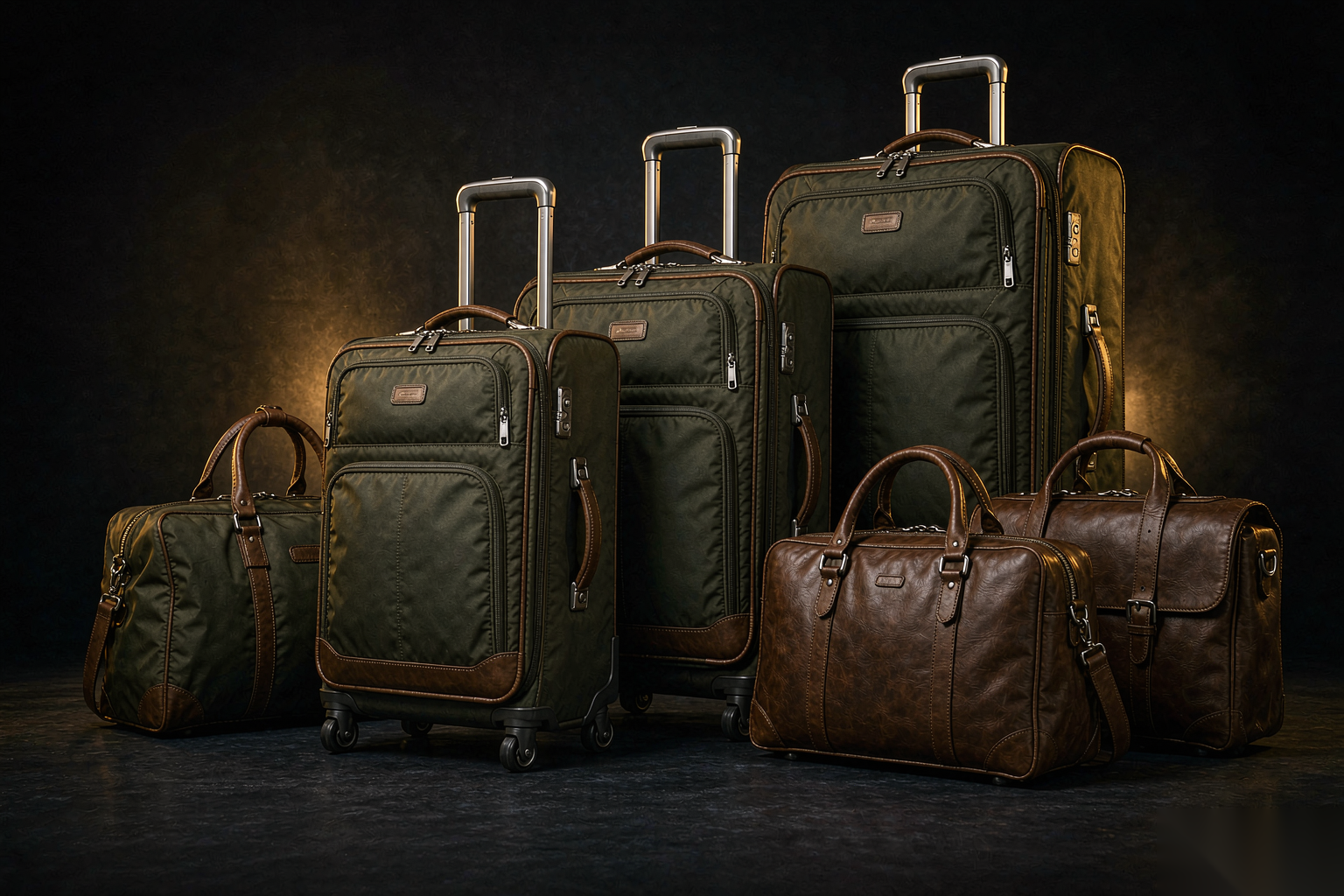
A luggage line is not twenty bags. It is one design language — a fabric, a leather trim, a hardware finish — expressed across twenty shapes that each earn their place in a traveler's week. This season's heritage luggage collection was developed under exactly that discipline: olive canvas-family fabrics, vegetable-tanned leather trim, and gunmetal hardware, held consistent from the largest checked spinner to the smallest travel wallet. Here is the line, piece by piece, with the development logic behind each category.
The Collection at a Glance
The line divides into three families: rolling luggage (spinners and rolling duffels), carry pieces (backpacks, briefcases, totes, and duffles), and organizers (wallets, folios, tech organizers, and packing cubes). Every piece shares the same fabric family and leather trim so the line reads as one collection on a luggage cart — the test any real traveler applies without knowing it.
Rolling Luggage: The Spinner Family
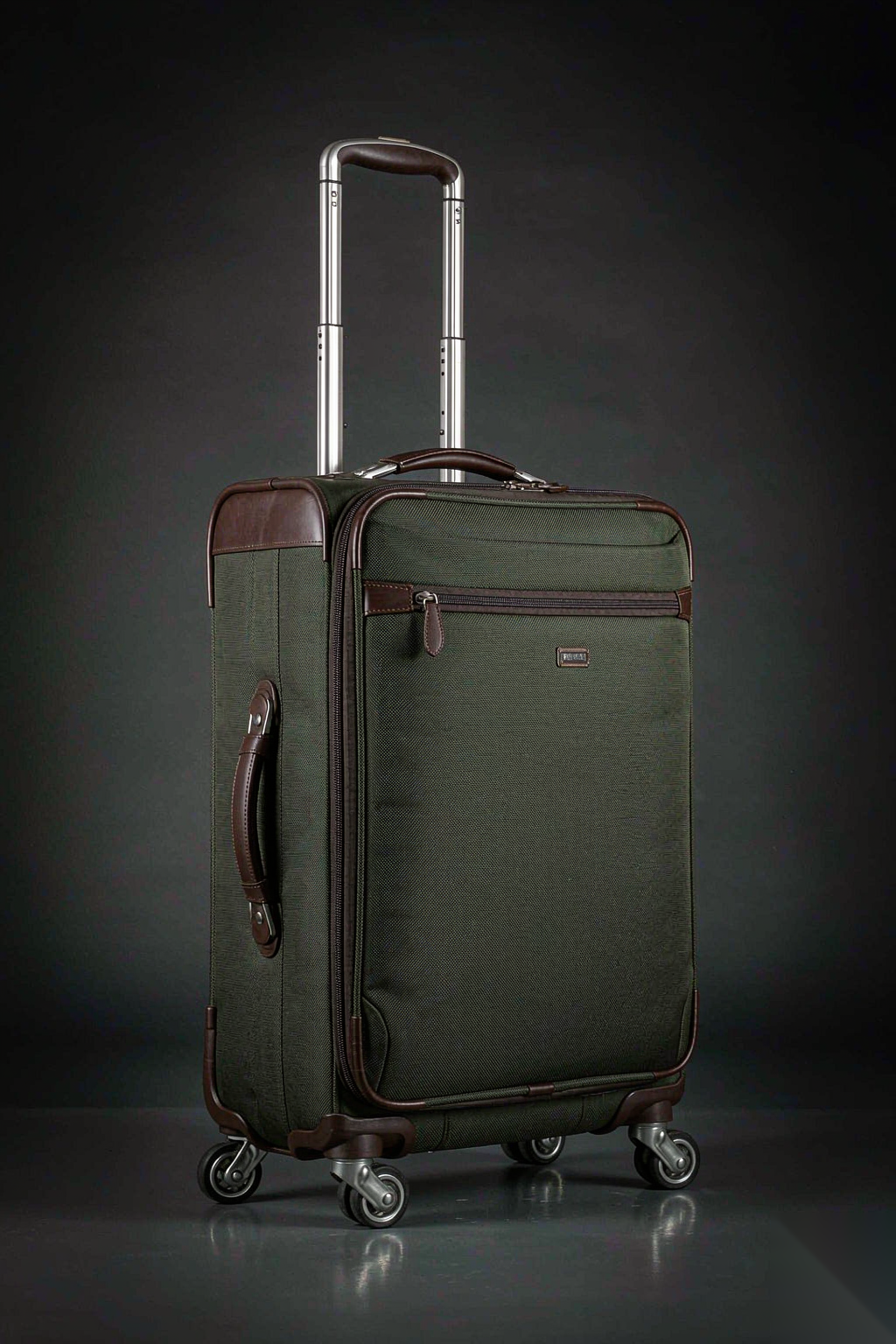
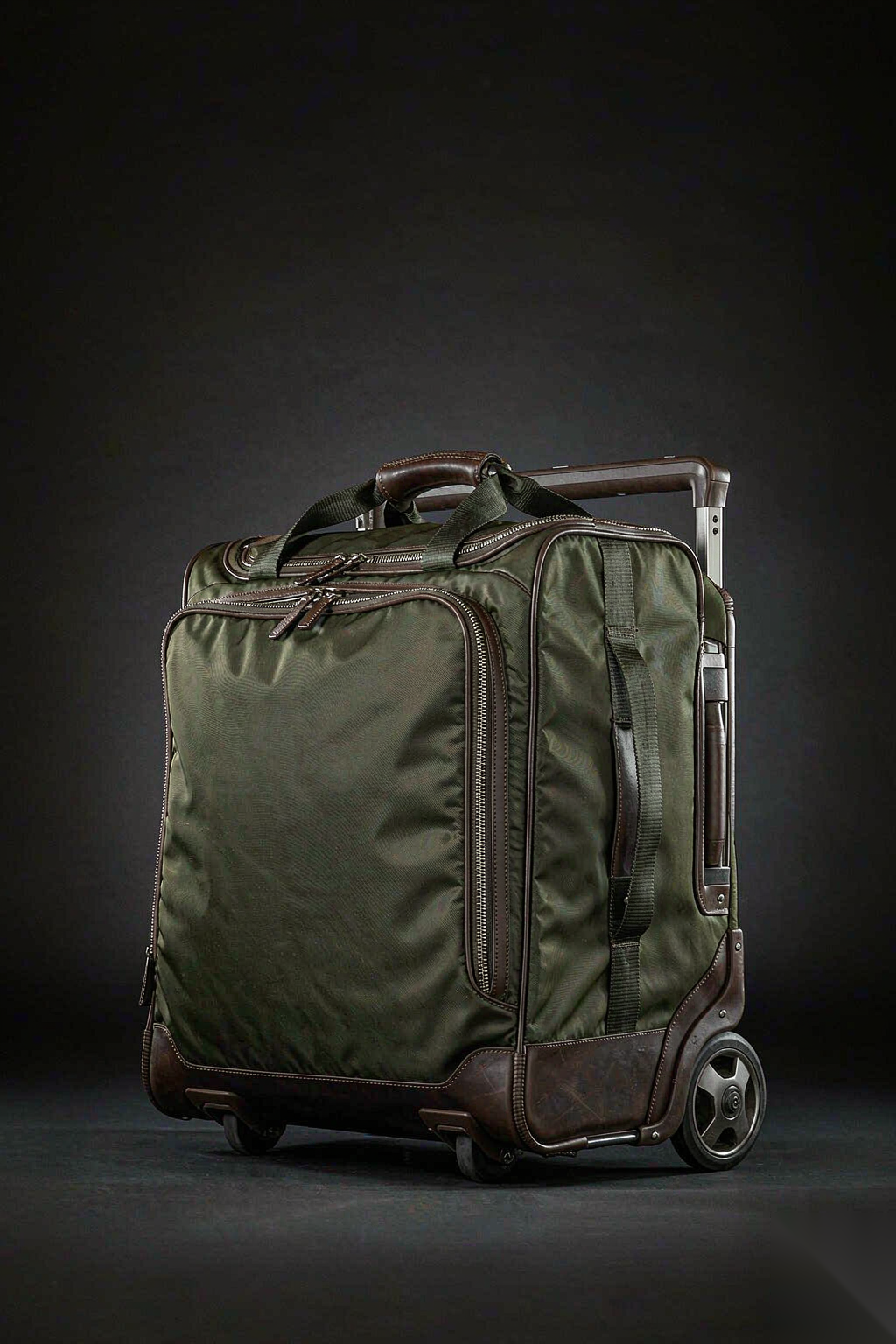
The carry-on spinner is the line's anchor piece. Development focus: telescoping handle wobble, wheel housing clearance, and the corner leather guards that take airport abuse. The checked size shares the same shell geometry scaled up, which keeps the mold investment to one family rather than two.
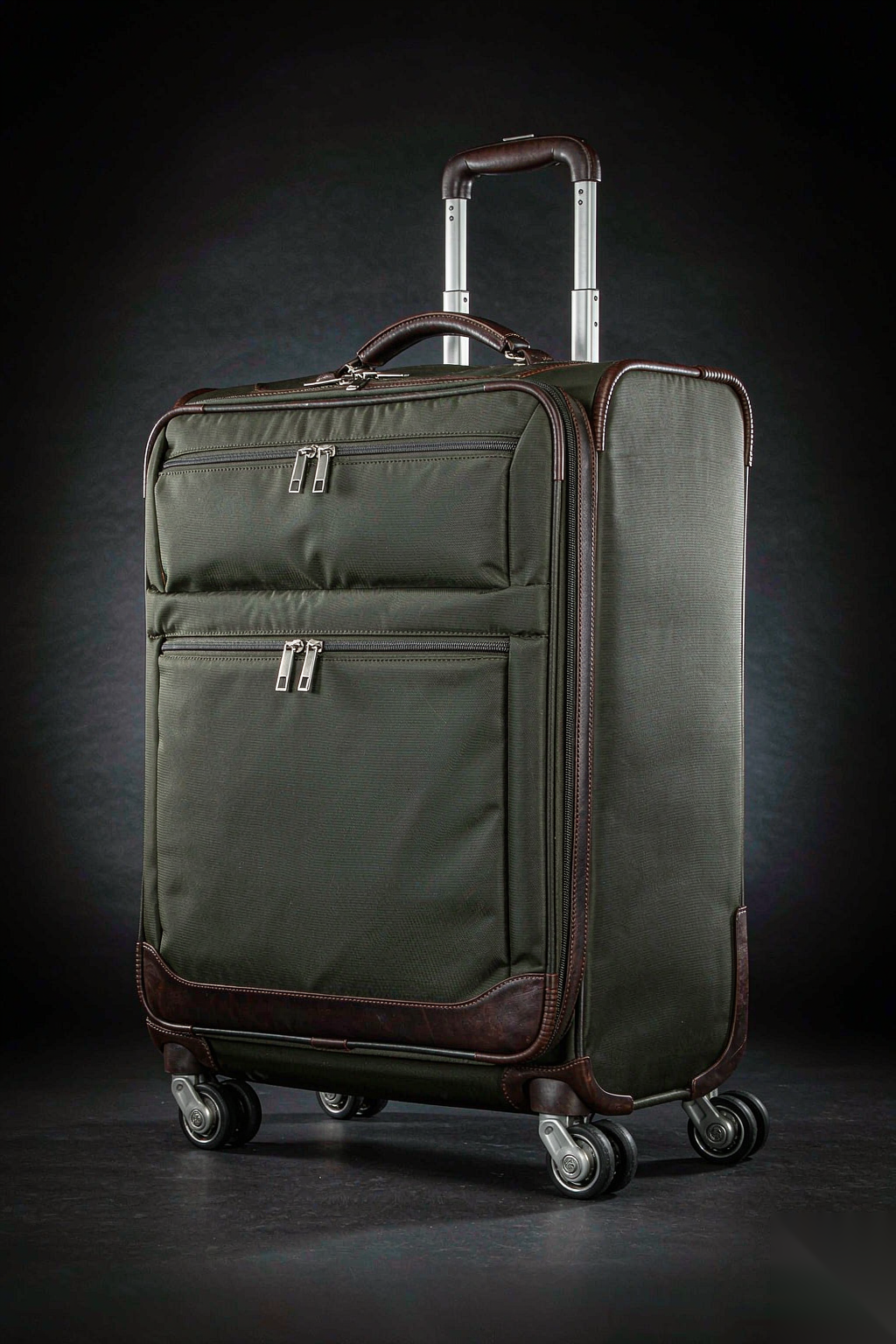
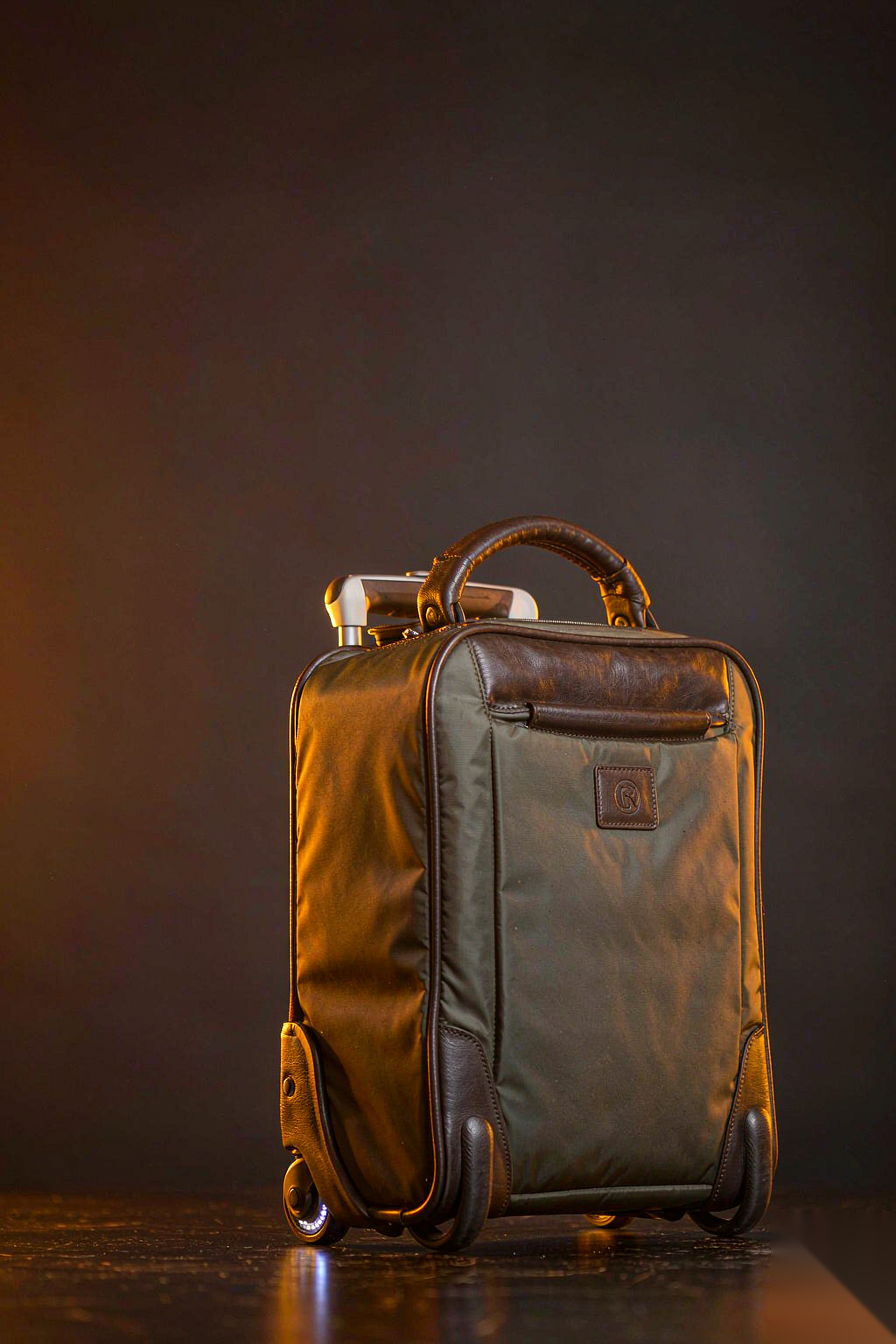
The underseat spinner solves a different problem: regional flights where overhead space is a lottery. Its development constraint was the cabin dimension box — everything else (pocket count, handle height) bends to fitting the smallest certified space.
Carry Pieces: Backpacks, Briefcases, Duffles
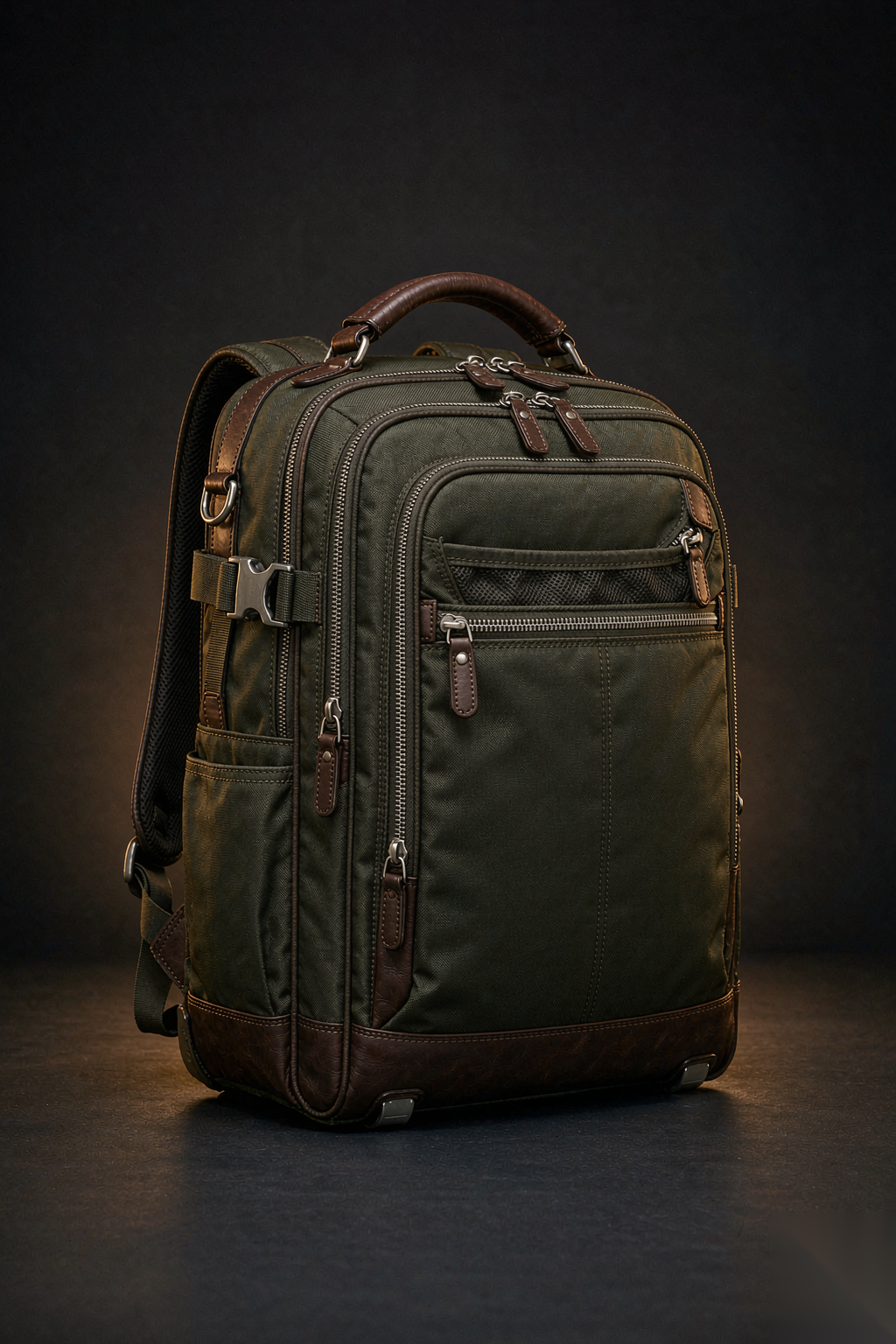
The business backpack carries the line's commuter story. Its development centers on load discipline — strap anchoring, back-panel structure, and zipper ends reinforced at exactly the stress points. Our guide to backpack development specs walks through the five spec lines and three load tests that shaped it.
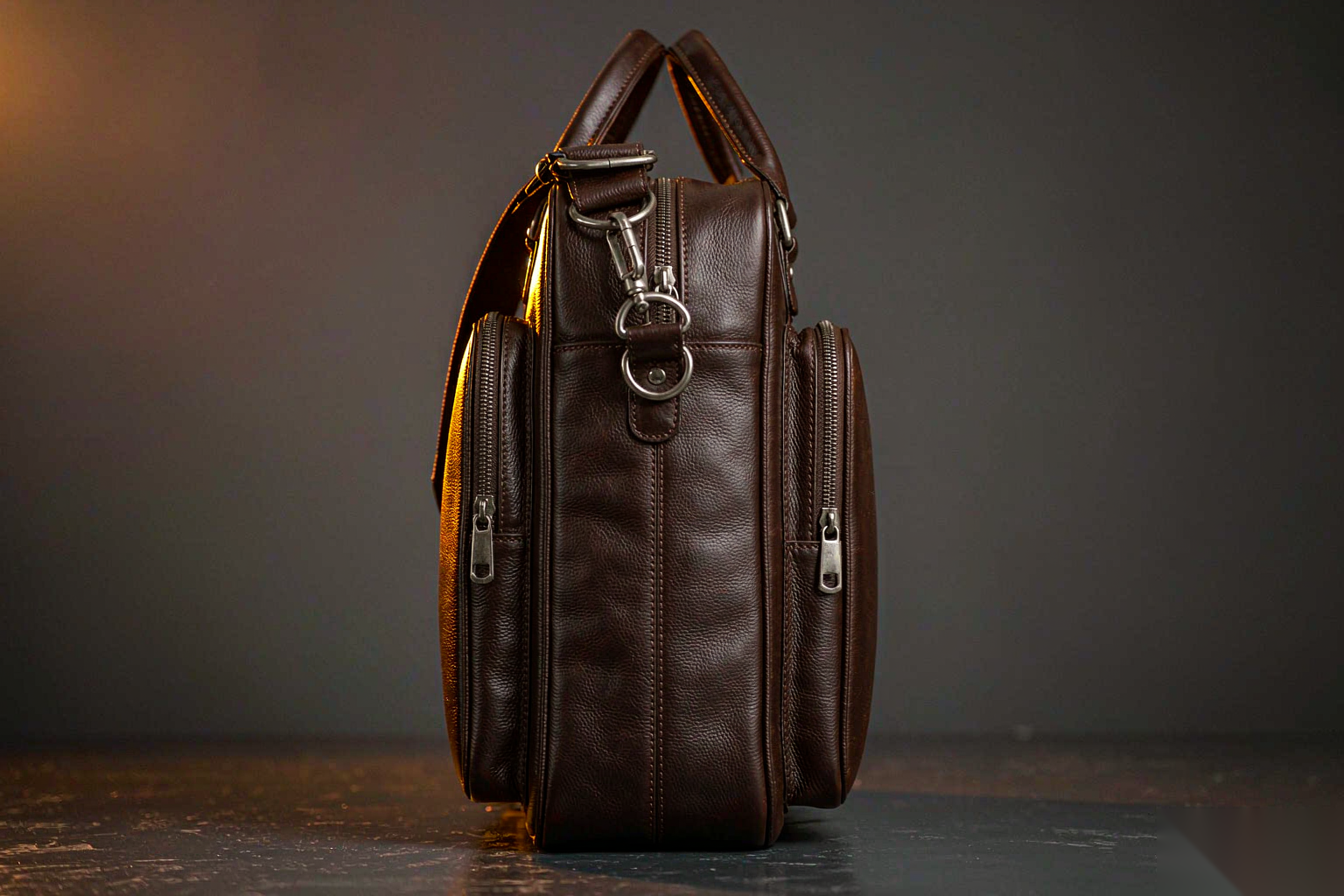
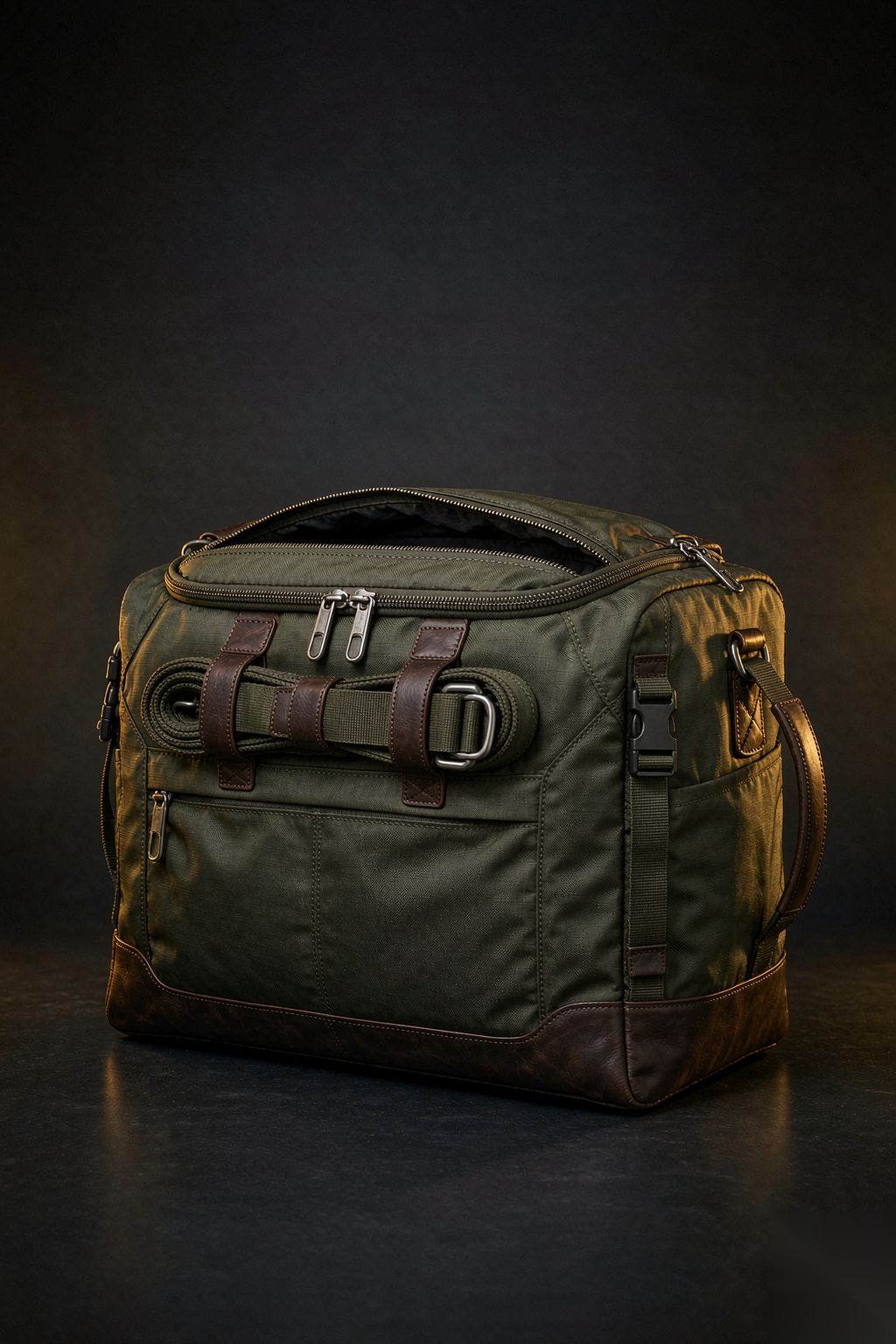
The convertible duffel is the line's most complex build — two carry systems, one bag. The development challenge was the strap stowage: backpack straps must disappear cleanly behind a zippered panel when the piece travels as a duffel.
Soft Carriers: Totes and Garment Bags
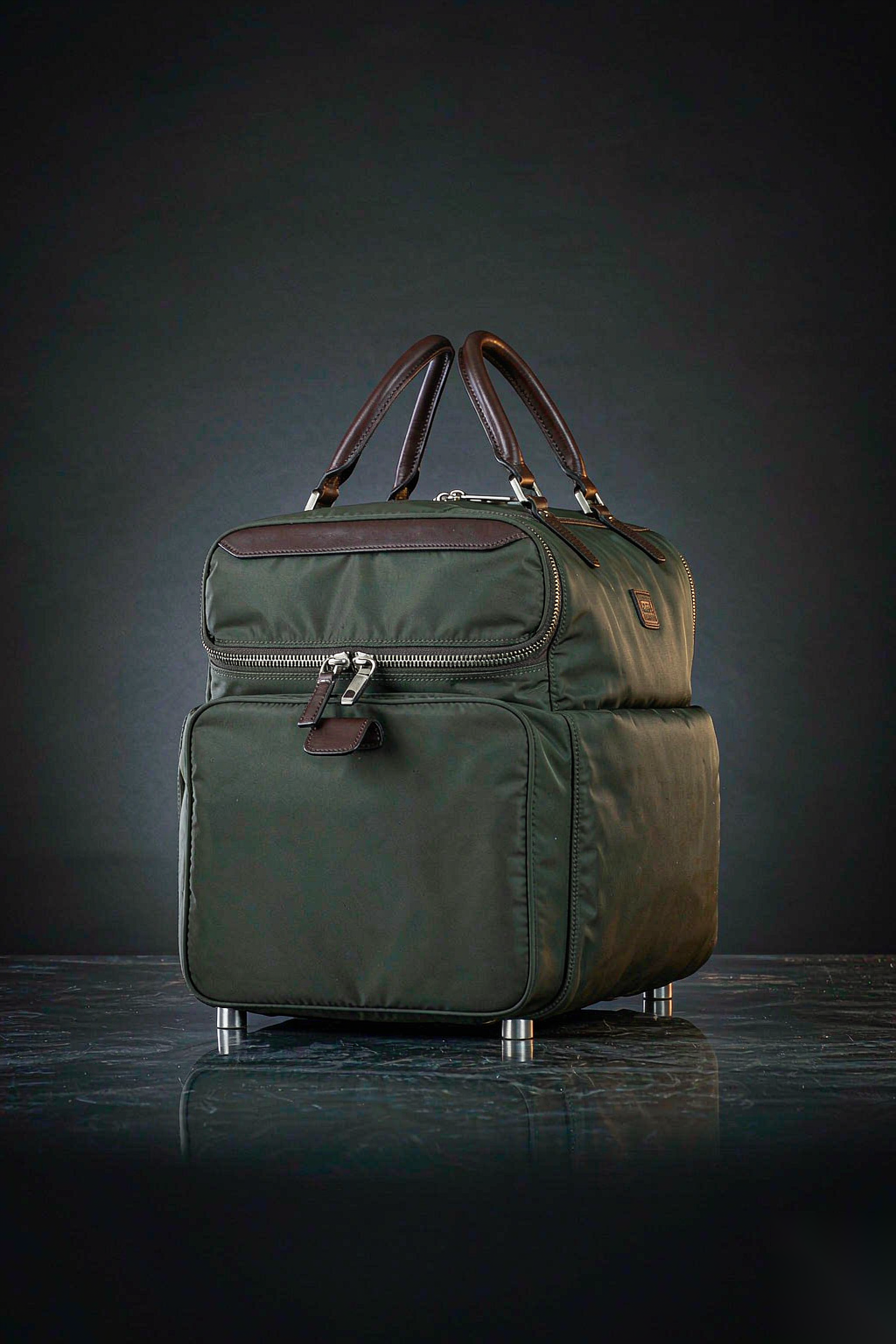
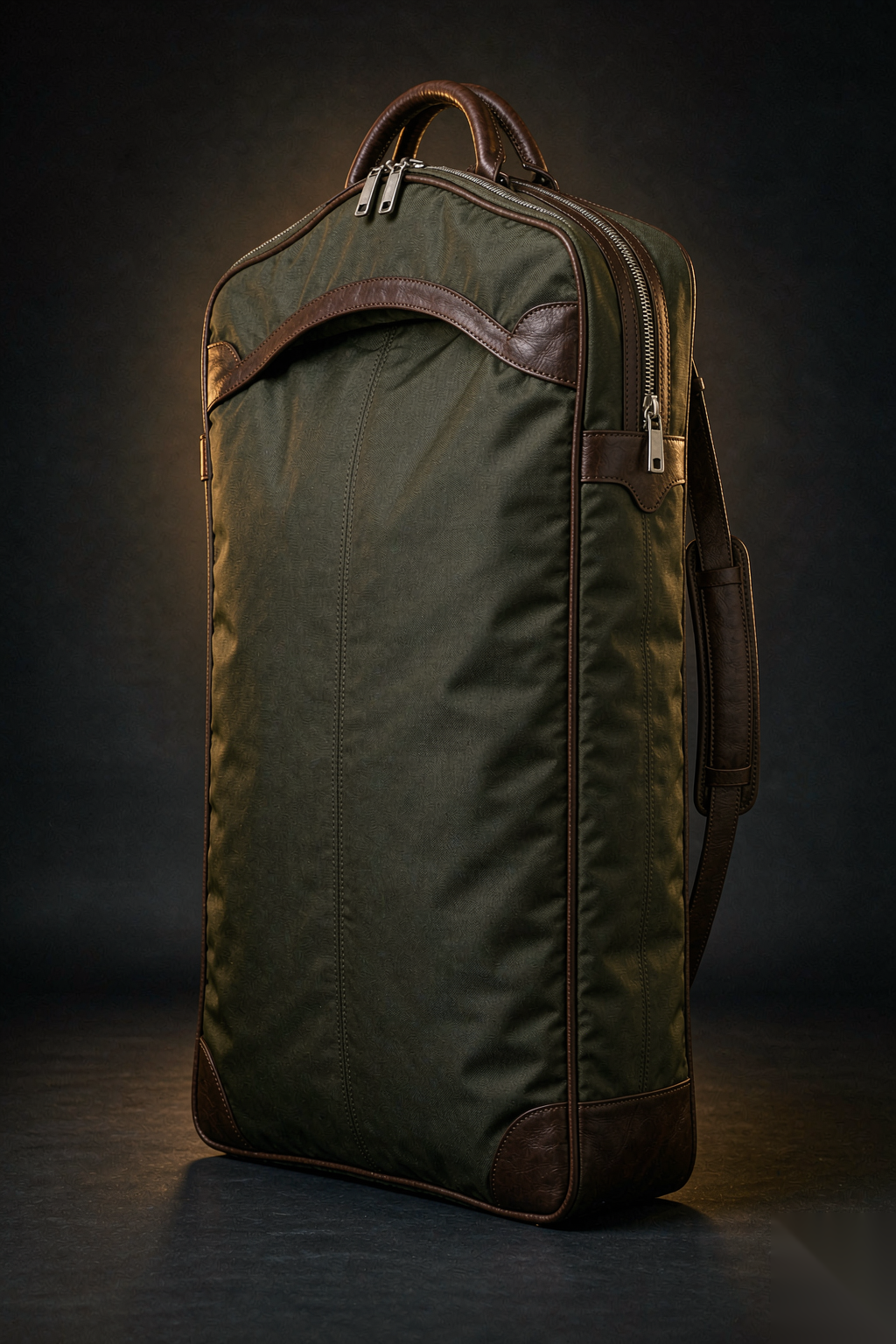
The garment bag earns its place by solving fold-line discipline — suits arrive wearable. Its internal strap system and the shoulder-padding geometry were the two rounds of sampling that mattered.
Organizers: The Line's Detail Layer
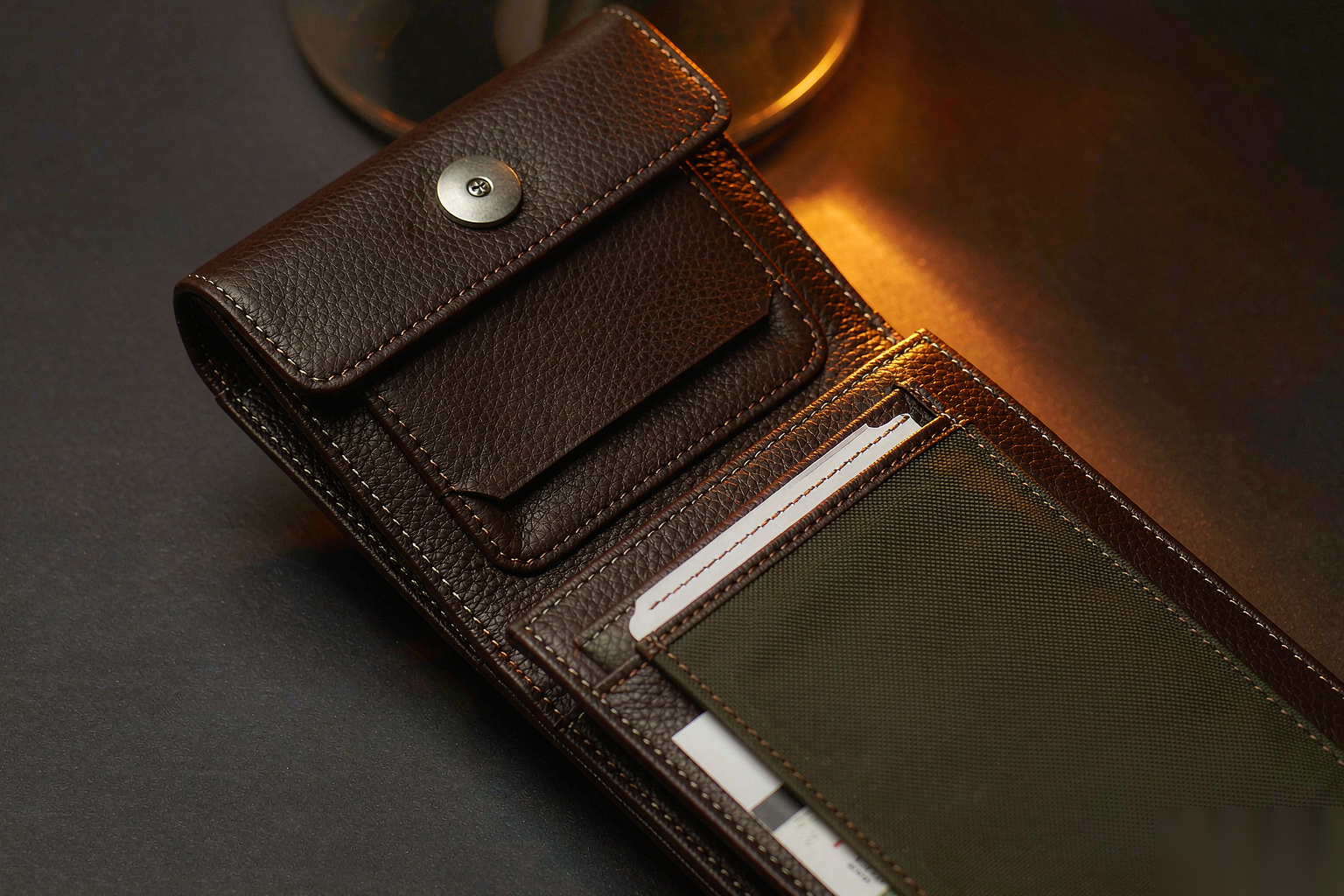
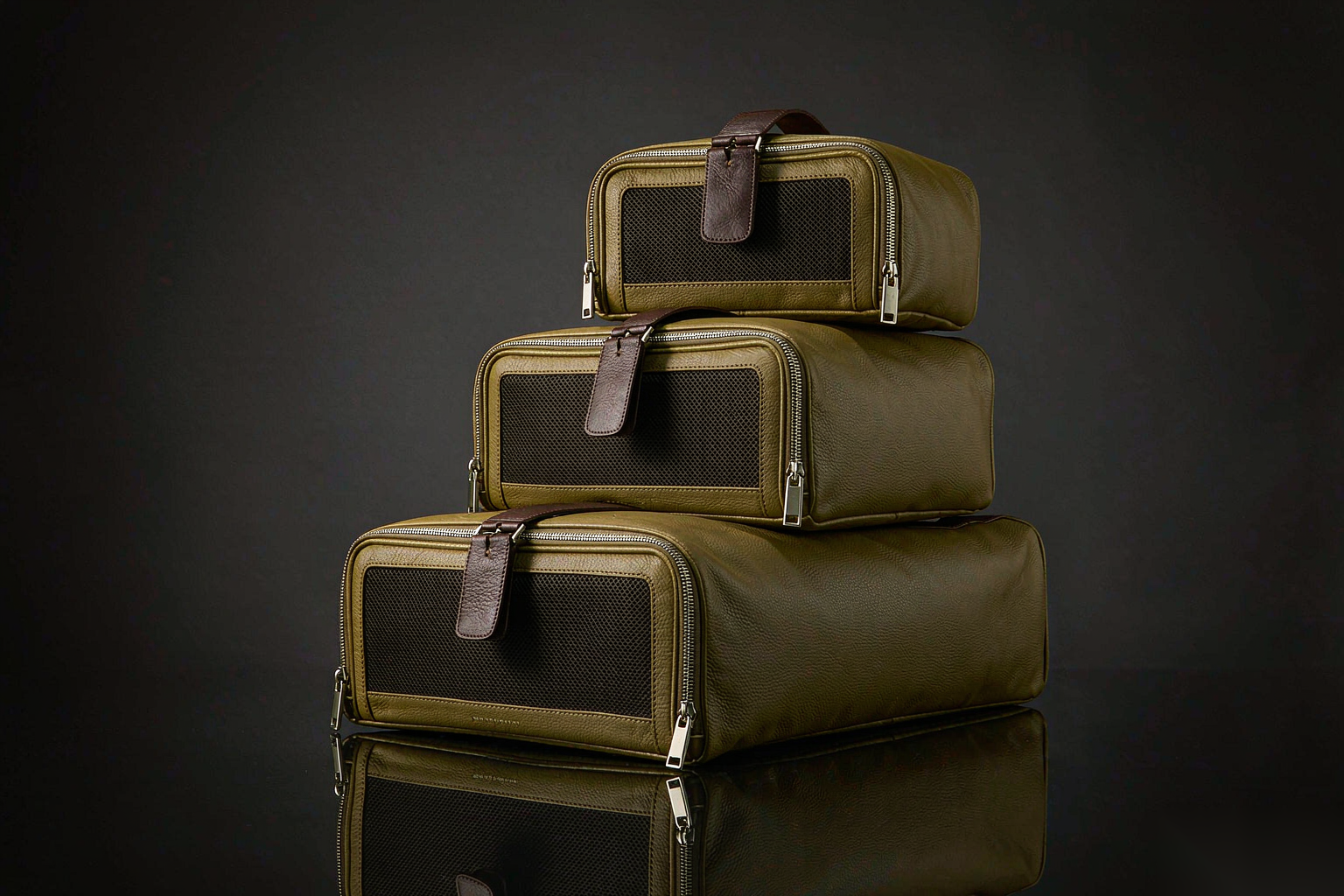
Organizers are where a luggage line builds margin and loyalty: they are the pieces buyers add at checkout and use on every trip. Development priority here is interior layout and material hand-feel rather than structure — a different checklist from the spinner family, run under the same standard.
The Line Display: How Consistency Reads
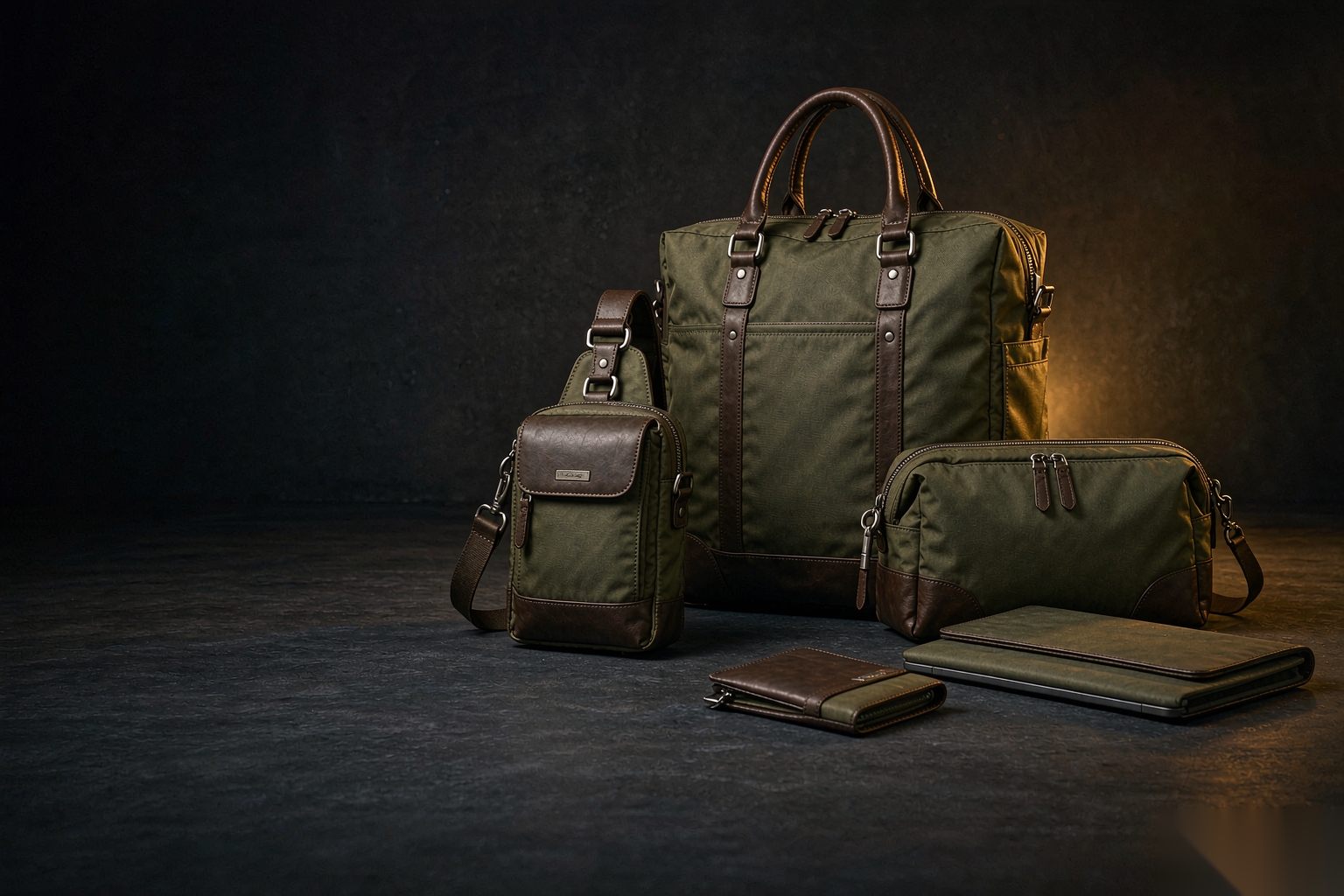
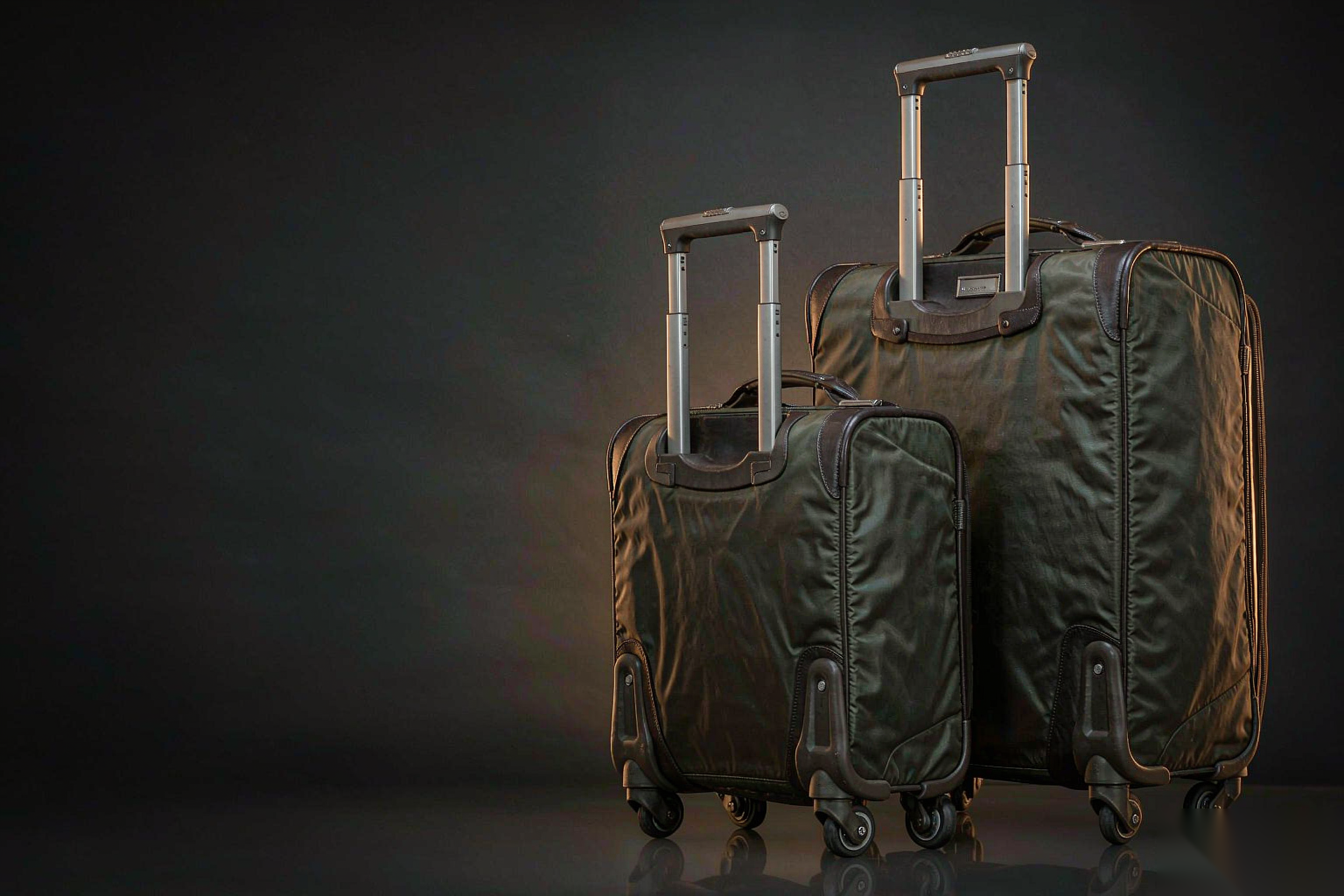
Set the pieces side by side and the shared development standard becomes visible: same trim leather tone, same hardware finish, same stitching density. That consistency is not an accident of sourcing — it is written into the spec sheet for every piece, and checked at every sample round. It is also what separates a collection from a catalog: buyers can start with any one piece and add others over years without the line drifting.
What This Line Demonstrates for Buyers
For brands considering a luggage or bag program, this collection is a working demonstration of three things we run across categories: a coherent design language held across shapes, specialist factories matched to construction type, and QC applied at the stress points where each category actually fails — handle anchors on spinners, strap anchors on backpacks, fold lines on garment bags.
MOQs depend on the product and factory. Tell us what you need and we confirm what is realistic before you commit to anything.
The cluster behind this line is the same one described in our Quanzhou bag sourcing guide, and the sample discipline comes from the same pipeline as our footwear work — see our development process for how spec, sampling, and QC connect.
Frequently Asked Questions
Can the line be customized for my brand?
Yes — the development standard is separable from the design language. Fabrics, colorways, leather trim tones, and hardware finishes are all specifiable; the construction and QC pipeline stays the same.
Which pieces are the strongest first order?
The carry-on spinner, the business backpack, and the packing cubes cover three price tiers and share the design language. A three-piece first order tests the line with the least commitment.
How long does a full line like this take to develop?
The pieces share materials and hardware, so development runs in parallel rather than in sequence. The calendar depends on the number of molds and hardware tooling, which is confirmed per program.
The Takeaway
Fourteen pieces shown here, one development standard underneath. That is what a luggage line needs to read as a collection, survive real travel, and give a brand room to grow — and it is the standard we apply whether the program is twenty pieces or two hundred.
