
Industry Insights
Lightweight Materials for Travel Bags: The Strength-to-Weight Revolution
Every gram counts when the bag is the passenger. The lightweight material families — ultra-high-denier nylon, Dyneema composites, and ultralight rPET — that cut weight without cutting strength.
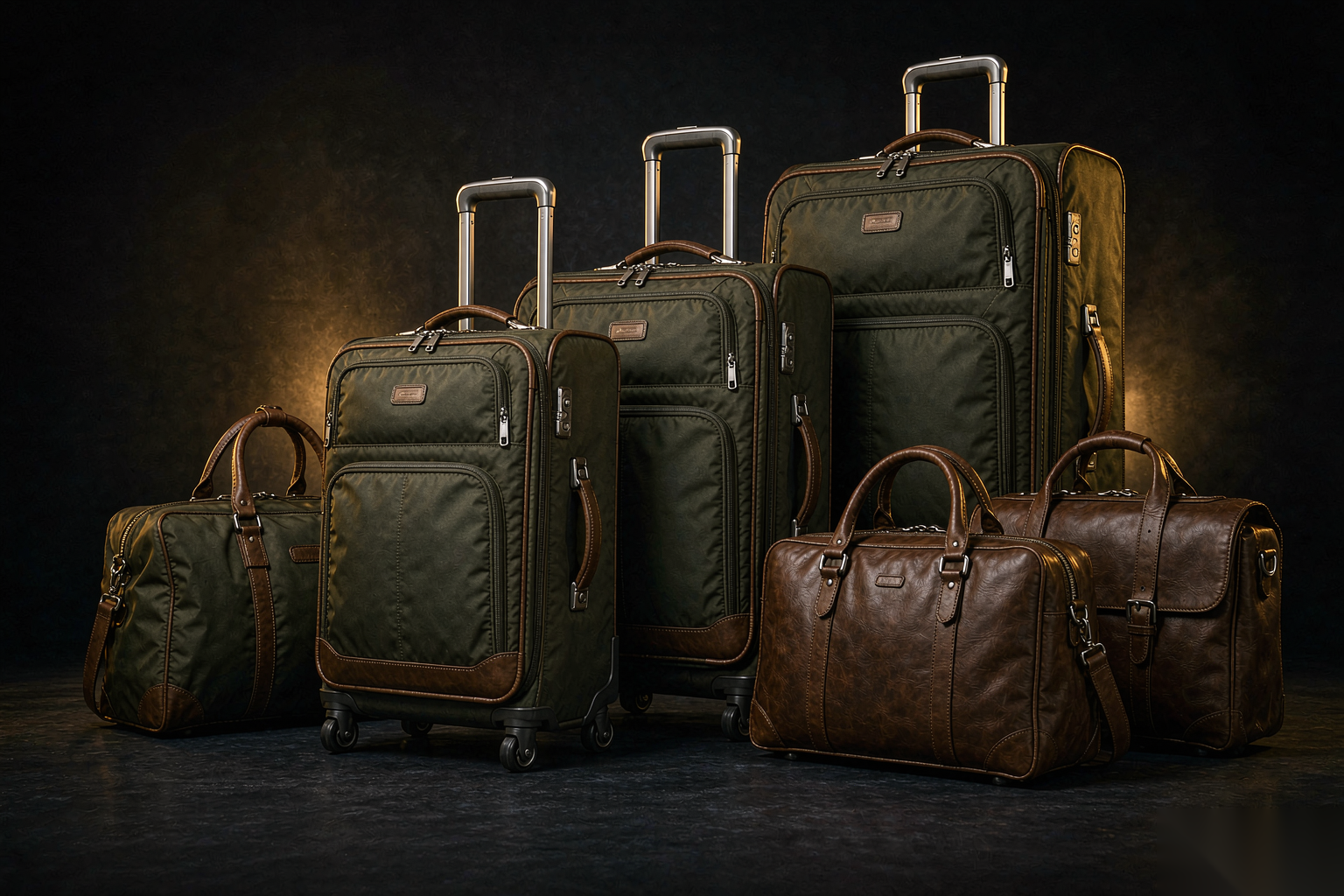
Every gram counts when the bag is the passenger. Airlines charge for overweight luggage; travelers feel the difference between a 1.5-kilogram bag and a 1-kilogram bag after a long transit day. Lightweight materials for travel bags have become a development priority — not as a niche for ultralight backpackers, but as a mainstream demand from every traveler who has ever carried a bag that was heavier empty than the contents inside. Here are the lightweight material families, their strength-to-weight trade-offs, and how to spec them without sacrificing durability.
The Strength-to-Weight Metric
The metric that governs lightweight material selection is tensile strength per unit weight — how much force the fabric resists per gram of its own weight. Three material families lead the category:
Material Family | Weight Class | Tensile Strength | Abrasion Resistance | Cost Class |
|---|---|---|---|---|
Ultra-high-denier nylon (70D-210D ripstop) | Very light | Good | Moderate (ripstop compensates) | Low-mid |
Dyneema composite fabric (DCF) | Ultra-light | Exceptional | Excellent | High |
Lightweight rPET (50D-150D) | Light | Good | Good | Low-mid |
Each family serves a different bag type and price point. The development decision is not "which is strongest" but "which strength-to-weight ratio matches the bag's use case at the target price."
Ripstop Nylon: The Practical Lightweight
Ripstop nylon — lightweight nylon woven with a reinforcement grid at regular intervals — is the practical lightweight champion:
The ripstop grid. Thicker reinforcement threads woven every 3-5mm create a grid that stops tears from propagating. A puncture or tear stops at the next grid line rather than running the length of the panel.
Weight range. 70D (ultralight) to 210D (standard lightweight) — the denier number roughly correlates with durability.
Coating compatibility. Takes PU and DWR treatments without adding significant weight.
The trade: ripstop nylon's abrasion resistance is lower than heavier fabrics — the grid prevents tears but does not prevent surface wear. For bags whose primary abuse is tears and punctures (packing cubes, stuff sacks, lightweight travel packs), ripstop is the right choice. For bags whose primary abuse is abrasion (rolling luggage, daily commuters), heavier fabrics remain the better spec.
Dyneema Composite Fabric: The Premium Lightweight
Dyneema composite fabric (DCF, formerly Cuben Fiber) is the ultralight premium: fibers stronger than steel by weight, laminated between films:
Weight. DCF at 0.5 oz/yd² is lighter than most papers — yet it resists tearing better than 1000D nylon.
Waterproof. The laminate is inherently waterproof without coatings or treatments.
No stretch. DCF does not stretch under load — the bag holds its shape permanently.
The trade: cost. DCF is the most expensive fabric in the soft-goods category — a single DCF duffel can cost more to produce than five nylon duffels. It suits ultralight premium brands, not volume production.
Lightweight rPET: The Sustainable Lightweight
Recycled polyester in lighter deniers (50D-150D) offers a middle path: lightweight, lower cost than DCF, and a certifiable sustainability story:
Weight. 50D rPET is lighter than 400D standard polyester at comparable tensile strength.
Printing. Takes sublimation and heat transfer for full-color graphics — important for brands whose bags carry heavy prints.
Sustainability certification. GRS-certified rPET is increasingly demanded by retail buyers and expected by consumers.
The trade: lightweight rPET sacrifices abrasion resistance compared to heavier fabrics — the same trade as ripstop nylon, but with a sustainability narrative and better printing behavior.
Specifying Lightweight Materials: The Development Checklist
Lightweight material development follows the same spec discipline as any fabric choice, with three lightweight-specific additions:
1. Denier and weave spec. The exact denier, the weave type (ripstop, taffeta, oxford), and the thread count.
2. Tear test. Lightweight fabrics tear more easily than heavy fabrics — the tear test (not just the tensile test) is the quality gate. A tongue-tear test on the sample confirms the ripstop grid works.
3. Abrasion trade acknowledgment. The lighter fabric will abrade faster — the brand accepts this trade knowingly, or reinforces high-abrasion zones with heavier panels.
The third point is the design insight: lightweight materials are often combined with heavier panels in high-wear zones (the base, the back panel, the strap anchors). The hybrid approach — light fabric for the body, heavy fabric for the wear zones — is the spec that makes lightweight bags both light and durable.
MOQs depend on the product and factory. Tell us what you need and we confirm what is realistic before you commit to anything. Lightweight fabric MOQs are typically higher than standard fabric MOQs (the mills produce less volume), knowable from the factory before you commit.
Frequently Asked Questions
Is lightweight fabric always more expensive?
Not always. 70D ripstop nylon is often cheaper than 1000D nylon (less material). The cost premium applies to premium lightweight fabrics like DCF and certified lightweight rPET — not to all lightweight materials.
What is the lightest practical fabric for a travel bag?
50D ripstop nylon or rPET is the practical floor for travel bags — below this weight, the fabric becomes too fragile for real-world handling. DCF goes lighter but at premium cost.
Does lightweight fabric compromise waterproofing?
No — the waterproofing comes from the coating or laminate, not the fabric weight. A 70D ripstop with PU coating is as water-resistant as a 1000D fabric with the same coating.
Can lightweight bags be repaired?
Yes — ripstop nylon repairs easily with iron-on patches or seam tape. DCF requires specialized tape. The repairability is part of the lightweight fabric's appeal: small tears do not become bag-ending failures.
The Takeaway
Lightweight materials for travel bags are a strength-to-weight optimization, not a durability sacrifice. Ripstop nylon for practical lightweight, DCF for premium ultralight, and lightweight rPET for sustainable graphics-driven lines. The spec starts with the strength-to-weight target and ends with a tear test on the sample — and the traveler who carries the bag will feel the difference on every transit day.
