
Industry Insights
Midsole Foam Types: EVA, TPU, and Beyond
Midsole foam types compared—EVA, TPU bead foams, and supercritical processes—with density, rebound, and cost guidance for small brands.
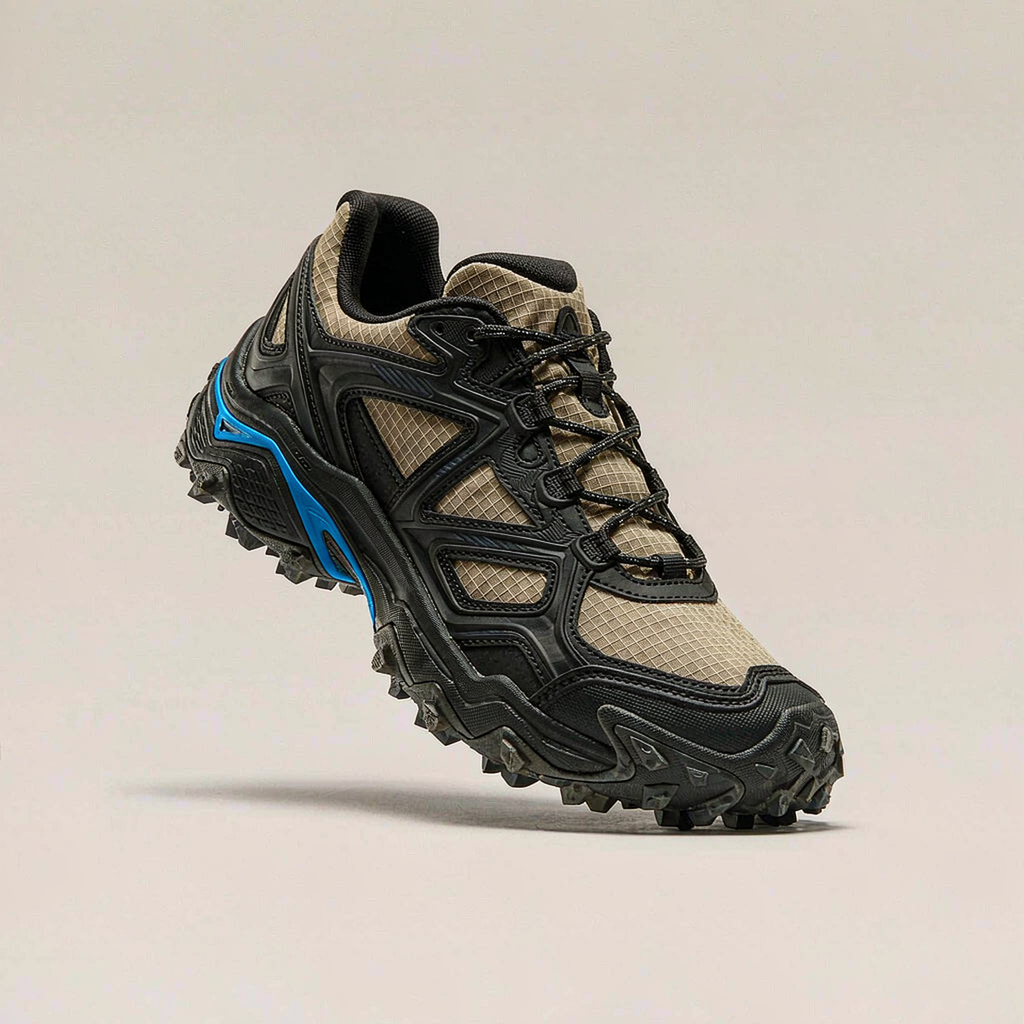
# Midsole Foam Types: EVA, TPU, and Beyond
Ask a factory what foam they can offer and the honest answer is "what performance and price point?" Midsole foam types sit at the center of a sneaker's cost and feel—the material decides cushioning character, weight, how the shoe ages, and a large share of the unit price. Yet foam is the least understood spec line for most new brands, who end up defaulting to whatever the factory uses for its other customers. This guide compares the main foam families, explains the processing terms you will hear, and shows how to choose and specify foam on purpose.
EVA: The Default Workhorse
EVA (ethylene-vinyl acetate) has been the industry's standard midsole material for decades, and for good reason: it is cheap, easy to mold, dyeable in any color, and predictable to manufacture.
EVA's properties come from two spec numbers:
• Density — usually quoted in g/cm³, commonly from around 0.15 (soft, lightweight, budget) up to 0.25+ (firm, durable, supportive). Density is the main lever: lower density feels plusher and weighs less but compresses and bottoms out faster; higher density holds its shape longer but reads "firm."
• Hardness — measured on the Shore C scale for foams, it tunes feel independent of density within limits.
EVA's weakness is fatigue. Compress it thousands of times and the cell structure collapses; the foam loses rebound and height. For a fashion silhouette worn occasionally, that aging curve is acceptable. For a shoe worn daily, it is the reason a six-month-old EVA midsole feels flat.
EVA is processed two ways, and the difference matters for your MOQ:
Process / How it works / Cost & MOQ character
• Compression molding — Foam sheets are cut, stacked, and pressed in shaped molds — Lower tooling cost; flexible for smaller runs and multi-density stacks
• Injection molding — Molten EVA is injected directly into the mold — Faster per pair at volume; higher tooling cost; less common for small brands
TPU Bead Foams: The Resilience Upgrade
TPU (thermoplastic polyurethane) bead foams—made by expanding small pellets and steam-molding them like popcorn into a mold—changed the performance market because they solve EVA's fatigue problem. TPU foam springs back after compression far better, so cushioning feels consistent for much longer, and energy return is noticeably livelier.
The trade-offs are real:
• Cost per pair is multiples of EVA at the same geometry.
• Tooling is different (steam molds), and not every factory runs it.
• Color and finish are more constrained—bead foams have a distinctive speckled or granular surface that reads "performance."
• Paintability is possible but adds a process step; unpainted TPU foam has a look that either fits your design language or does not.
For a streetwear brand, TPU foam makes sense when the product story is performance-casual crossover and the retail price supports the material cost. Used in a budget silhouette, it eats the margin without buyers noticing why.
The Processing Terms You Will Hear
Foam conversations with factories come wrapped in process vocabulary. Three terms cover most of it:
Supercritical foaming. A newer process family that uses CO2 or nitrogen under supercritical conditions to expand foam with finer, more uniform cells. Applied to EVA-family and other polymers, it produces foams that are lighter and more resilient than conventional EVA at similar densities—the "premium EVA" feel that many mid-price performance shoes use. Cost sits between standard EVA and TPU bead foam. If a factory offers "supercritical EVA," you are in upgraded-cushioning territory without full TPU pricing.
Compression set. The laboratory proxy for "how flat does this foam get." Specs quote it as a percentage; lower is better. You do not need to test it yourself—but you can ask a factory what compression set their standard foams achieve, and their fluency tells you how foam-literate the factory is.
Density grading. Many factories hold standard recipes at a few densities (e.g., 0.18/0.20/0.22). Choosing from a factory's existing recipe library is faster and cheaper than commissioning custom foam—and for a first release, library recipes are almost always the right call.
Choosing Foam for Your Product and Price Point
The decision matrix that works for small brands:
Product intent / Sensible foam choice / Why
• First release, lifestyle, moderate price — Compression-molded EVA, mid density (≈0.18–0.20) — Predictable, dyeable, low tooling cost, easy to source
• Daily-wear model, comfort-forward — Higher-density EVA or supercritical EVA — Slower fatigue at still-manageable cost
• Performance-casual flagship — TPU bead foam or supercritical foam — Long-horizon resilience justifies the cost at higher retail
• Kids' or budget lines — Standard EVA at cost-tuned density — Kids outgrow shoes before foam fatigues
Two combination notes. First, midsoles are often built in layers—firm EVA frame with a softer insert, or a foam midsole with a rubber-and-EVA cupsole—so "the foam" may be several decisions. Second, foam choice interacts with heel-to-toe drop geometry, stack height, and outsole weight; specify them together in the tech pack rather than in separate conversations.
What to Write in the Spec
A foam spec a factory can quote against contains: material family (EVA / supercritical EVA / TPU bead), density range, hardness range, molding process, color (with Pantone reference), part weight target, and the approved physical sample as the feel anchor. "Midsole: EVA, 0.20 ±0.02 g/cm³, molded, white, Pantone XXXX, weight ≈ XX g per pair" invites precise quotes and catches substitutions at inspection. Feel is subjective—so the golden sample, kept and referenced, does the talking where numbers run out.
Developing Foam Specs with a Manufacturing Partner
Foam is where factory selection matters most: shops differ widely in recipe libraries, molding equipment, and willingness to explain trade-offs. We work inside the Quanzhou–Jinjiang belt with factories across the EVA-to-TPU spectrum, so we can put a brand's cushioning intent in front of two or three factories with different foam capabilities and compare real proposals—density options, process routes, and costs—before any tooling is cut. Our sneaker performance tech overview and how to develop a sneaker guide map where foam fits in the larger development sequence.
On minimums: "MOQs depend on the product and factory. Tell us what you need and we confirm what is realistic before you commit to anything."
FAQ
What density EVA should a lifestyle sneaker midsole use? Around 0.18–0.20 g/cm³ is the common comfort zone for lifestyle midsoles: soft enough to feel cushioned, dense enough to hold shape for a reasonable period. Lower densities feel plusher but flatten sooner; if your buyers will wear the shoe daily, step up the density rather than the softness.
Is TPU foam worth the cost for a small brand? Only when performance resilience is part of the product story and the retail price carries it. TPU bead foam costs multiples of EVA and needs different tooling. For most first releases, mid-density EVA or supercritical EVA delivers a better margin-to-feel ratio; save TPU for a flagship model.
What does "supercritical" mean in foam specs? It refers to a foaming process that uses CO2 or nitrogen in a supercritical state to create finer, more uniform cells. The result is lighter, more resilient foam than conventional EVA at comparable density—often the material behind "premium EVA" cushioning at mid-price points.
Why does my midsole feel flatter after a few months? Foam fatigue: repeated compression collapses the cell structure, and EVA is the most susceptible of the common midsole materials. Higher density, supercritical processing, or TPU-based foams resist fatigue longer. If daily-wear flattening is a complaint you want to avoid, raise foam quality—or plan for it in your product positioning.
