
Industry Insights
School Backpack Ergonomics: Designing for Growing Spines and Heavy Books
School backpacks carry loads on developing bodies. The ergonomic design features — padded backs, strap geometry, weight distribution — that parents and schools look for.
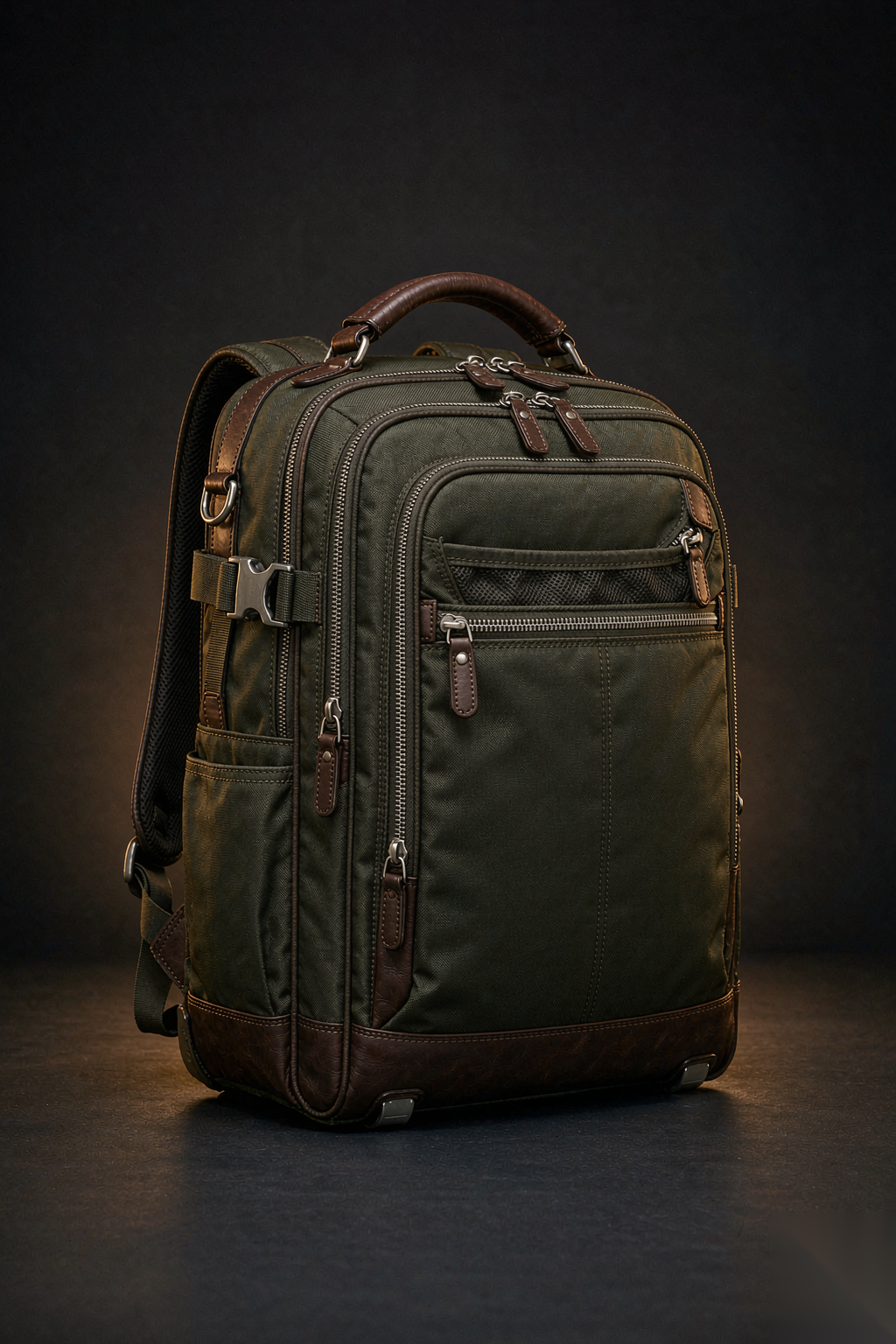
The school backpack carries the heaviest regular load of any consumer bag category — textbooks, laptops, lunch boxes, water bottles, sports kits — on the bodies of children and teenagers whose frames are still developing. School backpack ergonomics is therefore a design discipline with real stakes: the features that distribute load correctly do more than improve comfort, they protect the posture of the people using the product every school day for years. Here is what the ergonomic spec covers, and how brands design school packs that parents trust and students actually carry.
The Load Reality: What Students Actually Carry
Before any design decision, the weight reality: a loaded school backpack routinely carries 10-20% of the student's body weight — textbooks alone can exceed three kilograms, and the full kit pushes further. The ergonomic design targets this load directly:
Distribute to the strongest structures. The hips and the large back muscles carry load better than the shoulders alone — which is why padded hip belts on larger school packs are a health feature, not a hiking affectation.
Keep the load close. The distance between the bag's center of mass and the spine determines the leverage the load exerts — a pack that hangs away from the back multiplies the effective weight.
Get the height right. The pack's top should sit at the shoulder line, not above the head; the base at the waist, not below. Sizing to the student's torso, not their grade, is the ergonomic baseline.
Parents and schools increasingly check these features — the ergonomic spec is a selling point, not just a construction detail.
The Ergonomic Feature Set
Five features define a school pack's ergonomic quality:
Feature | What It Does | Development Note |
|---|---|---|
Padded back panel | Cushions spine contact, channels air | Contoured foam beats flat foam; ventilation channels reduce sweat |
S-curve padded straps | Follows shoulder anatomy | Straight straps dig; the S-curve distributes across the trapezius |
Adjustable strap length | Fits different torso heights | Growth room = sell-through across school years |
Sternum strap | Pulls straps off the shoulders inward | Optional on smaller packs; standard on larger |
Hip belt | Transfers load to the pelvis | Standard on packs designed for 6kg+ loads |
Each feature is testable on the sample: load it with the real weight, wear it for fifteen minutes, and feel where the strain concentrates. The strain points tell you which ergonomic feature is underspecified.
The Organization That Reduces Weight
Ergonomics is not just straps — organization reduces the load itself. The compartments that matter:
The book compartment. Sized to the actual textbook dimensions, positioned against the back panel (heaviest items closest to the spine — the load-distribution rule in action).
The tech compartment. A padded laptop or tablet sleeve, separate from books so screens do not share space with hardcovers.
The lunch and bottle zones. External pockets that keep wet/heavy items out of the book cavity — a water bottle leak inside the book compartment is the review a brand does not survive.
Every pocket needs a defined content — the same rule that governs travel backpack organization, applied to the school day's inventory.
Materials for the School Environment
School backpacks take a specific abuse profile: daily crushing in lockers and under desks, rain at the school gate, and the rough handling that students of every age apply. The material spec:
The shell. 600D-class polyester or nylon — abrasion-tolerant, wipeable, and available in the prints and colors the school market demands.
The base. Reinforced or double-layered — the bag stands on the floor all day.
The zippers. Chunky coil with large pulls — student hands in a hurry between classes. Our bag hardware guide covers the zipper classes; school packs favor durability over refinement.
Reflective elements. Safety-visibility strips on the front and straps — a feature parents and schools actively look for, at negligible cost.
MOQs depend on the product and factory. Tell us what you need and we confirm what is realistic before you commit to anything. School packs carry print-and-color MOQs that flex with the design — knowable from the factory before you commit.
Frequently Asked Questions
What is the ideal weight limit for a school backpack?
The ergonomic guideline holds loaded weight to 10-15% of the wearer's body weight. The bag's role is to carry that weight comfortably — the organization and strap design do the distribution, not the weight limit itself.
Are rolling school bags better ergonomically?
For heavy loads on smooth routes, yes. For stairs, crowds, and rough pavements, a well-fitted ergonomic pack outperforms. Many brands offer both formats — the choice belongs to the route, not the catalog.
Do hip belts actually work on school packs?
On loads above six kilograms, they measurably transfer weight from the shoulders to the pelvis. On smaller packs, they add complexity without benefit — the load threshold decides.
How can a brand test the ergonomics of its sample?
Load it to the design weight with real books, have three wearers of the target age walk for fifteen minutes, and document the strain points. The test costs nothing and catches every underspecified feature.
The Takeaway
School backpack ergonomics is load engineering for developing bodies: distribute to the strongest structures, keep the load close, get the height right, and organize so the heaviest things live against the back. The features are checkable on the sample, the spec is testable on the student, and the brand that gets them right earns the trust of the toughest buyer in the market — the parent.
