
Industry Insights
Performance Tech for Street Brands: Carbon Plates, TPU Cages, and What's Realistic at Your MOQ
Sneaker technology trends for street brands: carbon plates, TPU cages, and foams, minus the hype.
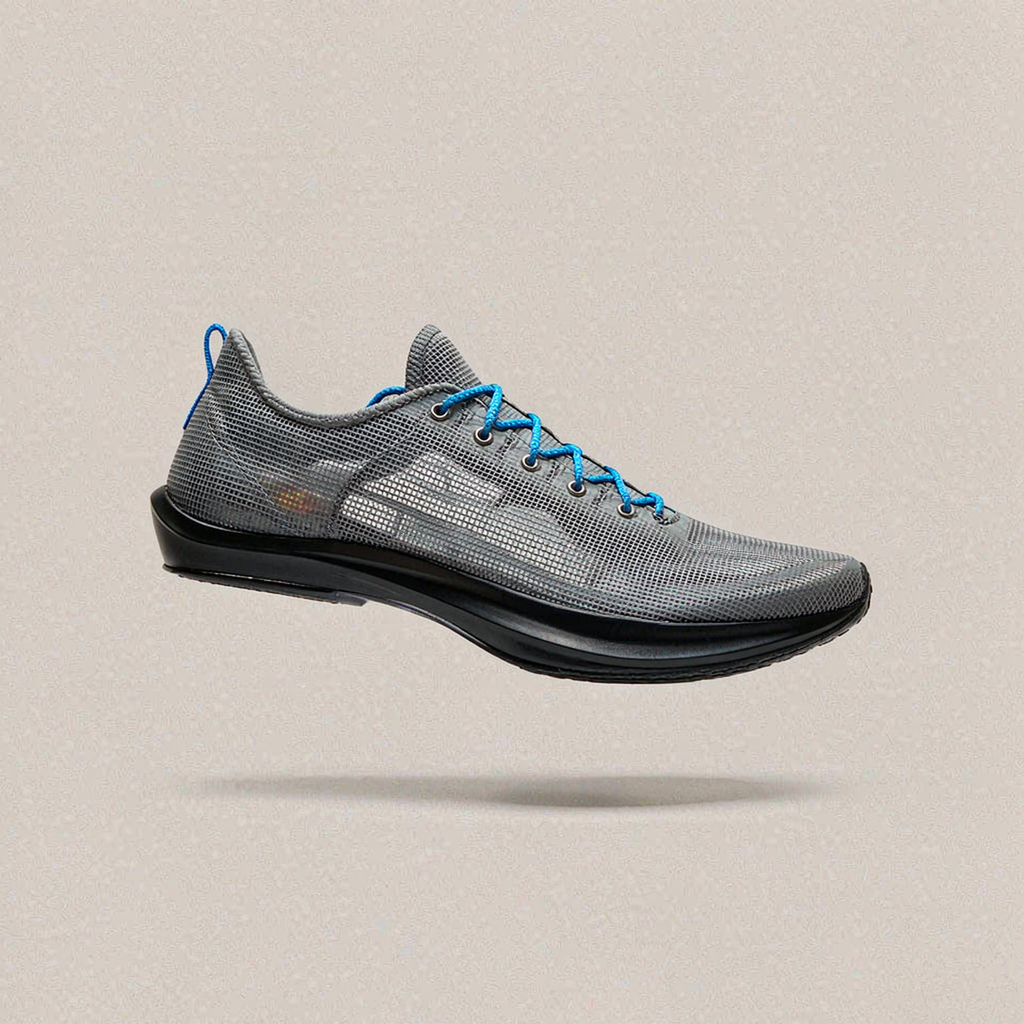
Performance Tech for Street Brands: Carbon Plates, TPU Cages, and What's Realistic at Your MOQ
Watch a season of sneaker releases and the same ingredients keep appearing: carbon plates, cut-out TPU frames, knit uppers that change texture mid-panel. Sneaker technology trends like these dominate review videos and release calendars, and they create a quiet anxiety for independent street brands. The tech looks premium, your budget is real-world, and nobody tells you where the line sits.
The line exists, and it is knowable. Performance tech is not a binary of pro-level or nothing. Each technology carries its own tooling demands, material costs, and volume thresholds — usually soft, but real. This article walks through five categories of performance tech and translates each into what it typically takes to develop and produce, so you can decide what belongs in your next cycle and what belongs in a later one.
Carbon Plates and Fiberglass Plates: The Strongest Story, the Steepest Bill
A plate is a stiff insert set inside the midsole, usually sandwiched between foam layers. Its job is simple: stop the midsole from collapsing at toe-off, so more of the foam's energy goes into the next stride instead of into bending the shoe. That is why carbon has become shorthand for serious performance — it is the most visible piece of hardware in modern sneaker design.
The catch is everything around the plate. Midsole geometry has to be designed around it. The plate itself is a molded component, which means tooling, and the raw materials are not cheap even before molding. Placement matters too: a plate that sits off-center or separates from the foam turns your flagship story into a returns problem.
In practice, full carbon plates usually pencil out for hero silhouettes at larger runs per colorway — not for a first drop of a few hundred pairs. Fiberglass is the honest middle path: visibly a plate, genuinely stiffening, friendlier on the bill. Many small brands build their plate story on fiberglass first and reserve true carbon for a model that has already proven it will sell. Whichever you choose, make sure the marketing says what the shoe actually contains.
Supercritical Foam: The Most Accessible Genuine Upgrade
Standard EVA is the midsole default: affordable, easy to work with, and honestly a little flat. Supercritical foaming changes the material's internal structure by expanding it with gas under pressure, and the results — bead-style E-TPU, PEBA-based foams, nitrogen-treated EVA — are lighter, bouncier, and more resilient than conventional EVA. Customers can feel the difference in hand, which makes this one of the few upgrades that sells itself.
Two realities to plan around. First, cost: a supercritical midsole carries a real premium per pair over standard EVA, which is why many independent brands use it selectively — the hero model gets the performance midsole, the rest of the line stays conventional. Second, processing: these foams have narrower working windows and their own quirks, so a factory that runs them regularly is worth far more than one that merely offers them.
The supply side has matured. Foam development and production are now widely established across China's coastal manufacturing clusters, Quanzhou included, which is part of why sneaker manufacturing in Quanzhou has become a practical route for mid-size brands chasing this tier of tech.
TPU Cages and Engineered Knit: Structure You Can See
A TPU cage — a molded frame wrapping the midfoot, lacing zone, or heel — does two jobs at once. Functionally, it locks the foot down and shields the foam. Visually, it creates the floating architecture that photographs well and reads as engineering. One mold, two stories.
The mold is the cost center. A full overshell demands serious tooling spend, so it usually makes sense on a flagship you intend to carry across seasons, not on a one-off experiment. The accessible cousin is the partial detail — lace cages, heel clips, small TPU accents — which delivers much of the visual language at a fraction of the tooling.
Engineered knit works differently. Instead of cutting and stitching panels, the upper is knitted in one piece with zones of varying density: tighter where you need support, more open where you need airflow, sock-like at the collar. The tooling is largely programming, which makes iteration cheaper than with molded parts. The risks move to the knitting floor — zone transitions, durability at high-stress points, and consistency between production runs all depend on the knitting factory's programming skill.
Low-Cost "Tech" That Reads Premium
Not every performance cue requires performance materials. A set of structural and visual techniques carries the tech aesthetic at sample-friendly budgets:
Welded overlays: thin TPU film strips heat-bonded instead of stitched — support lines with no stitch bulk, very modern running shoe.
Structural cut-and-sew: panel geometry that suggests engineering — asymmetry, wraps, angular seams — even when the materials are standard.
Printed and embossed detail: tech-style callouts, grid marks, tonal graphics that borrow the information-dense look of performance models.
Midsole sculpting: exaggerated sidewall geometry, two-tone pours, visible textures — the perception of tech through shape rather than material.
None of this is fake. It is design doing the work that materials would normally do, and for a first drop it is usually the highest-return place to spend. Save the material claims for the model that has earned them.
Sneaker Technology Trends at Your Order Size: A Planning Framework
Every season's sneaker technology trends arrive with an implied pressure to adopt all of them at once. Resist that. Sort each option by what it sells, what it costs to pursue, and where it usually fits in an order book. If you want the deeper mechanics of how minimums actually get set, we break down MOQs at Jinjiang factories separately.
Tech | What it sells | Cost magnitude | Where it usually fits |
|---|---|---|---|
Carbon plate | Strongest performance story; pro-tier credibility | High — molding plus a midsole designed around it | Hero silhouettes at larger runs per colorway; rarely a first drop |
Fiberglass or partial plate | The plate look and feel, softer claims | Moderate | The realistic entry point when you want plate language |
Supercritical foam midsole | Comfort customers feel in hand; a genuine tech claim | Moderate premium per pair; needs experienced processing | Hero models once the silhouette is settled |
TPU cage / overshell | Visible structure; flagship architecture | Mold-heavy up front | Multi-season flagships |
Engineered knit upper | Zoned comfort; clean, modern look | Programming-led; light tooling | Fast iteration; line extensions |
Welded overlays, prints, sculpted midsoles | Performance aesthetics | Low | Viable from the first sample run |
One honest footnote before you pick a row. Across the industry, marketing language tends to run ahead of materials: responsive foams that respond to nothing, plate-adjacent inserts sold as plates, zoned knits that turn out to be one flat knit. Reviewers and communities check now, and they publish what they find. The rule is simple — the narrative must match the materials. If the page says carbon, the shoe contains carbon. If it says zoned knit, the zones exist. An honest, modest claim compounds into brand trust; an inflated one turns your best marketing asset into your loudest liability.
Matching Tech to Your Development Budget
Sequencing matters more than selection. Get the silhouette and fit right first — no foam rescues a shoe that fits badly. Add one genuine tech element per season, to the model that has earned it. Validate with samples before you scale. Let the low-cost details carry the early drops while the heavier investments wait for proven shapes.
This is the conversation we have every week at GlobalSala. We are a footwear development and manufacturing partner based in Quanzhou, Fujian, working from concept development and spec sheets through factory matching in the Quanzhou–Jinjiang belt, sampling follow-up, production management, manual piece-by-piece pre-shipment inspection, and export paperwork. We develop footwear only — it is the single category we do — which is why our advice tends to be blunt about what a given order volume can carry. In our own words: "MOQs depend on the product and factory. Tell us what you need and we confirm what is realistic before you commit to anything."
That is also the posture this article asks you to take toward your own line: confirm what is realistic first, then build the story on top of it. You can see how we work on our footwear sourcing page.
FAQ
Can a small street brand realistically use carbon plates?
Usually not as a first move. Between the molding, the midsole design work, and the material costs, carbon tends to close only at larger runs per colorway. A fiberglass or partial plate delivers much of the story sooner; reserve true carbon for a silhouette that has already proven itself.
Is supercritical foam worth it over standard EVA?
Usually yes for your hero model — it is the upgrade customers can feel in hand, and supply is mature across China's coastal clusters. Many brands run it selectively: performance foam on the flagship, standard EVA across the rest of the line to protect margins.
How do I avoid overclaiming tech in my marketing?
Write copy only about what the shoe actually contains. Say plate-stiffened if the plate is fiberglass, and name a foam type only when it is accurate. Let design details carry the performance aesthetic without material claims — mismatches get caught fast by reviewers and communities.
What performance tech should a first drop focus on?
Low-cost details that read premium: welded overlays, sculpted midsoles, structural panel work, printed tech details. Spend the development budget on fit and finishing first, and keep plate, cage, and foam investments for a proven silhouette in a later cycle.
