
Industry Insights
Chunky to Slim and Back: Silhouette Cycles and Timing Your Sneaker Launch
Sneaker silhouette trends swing from chunky to slim. Here is how to time your development calendar.
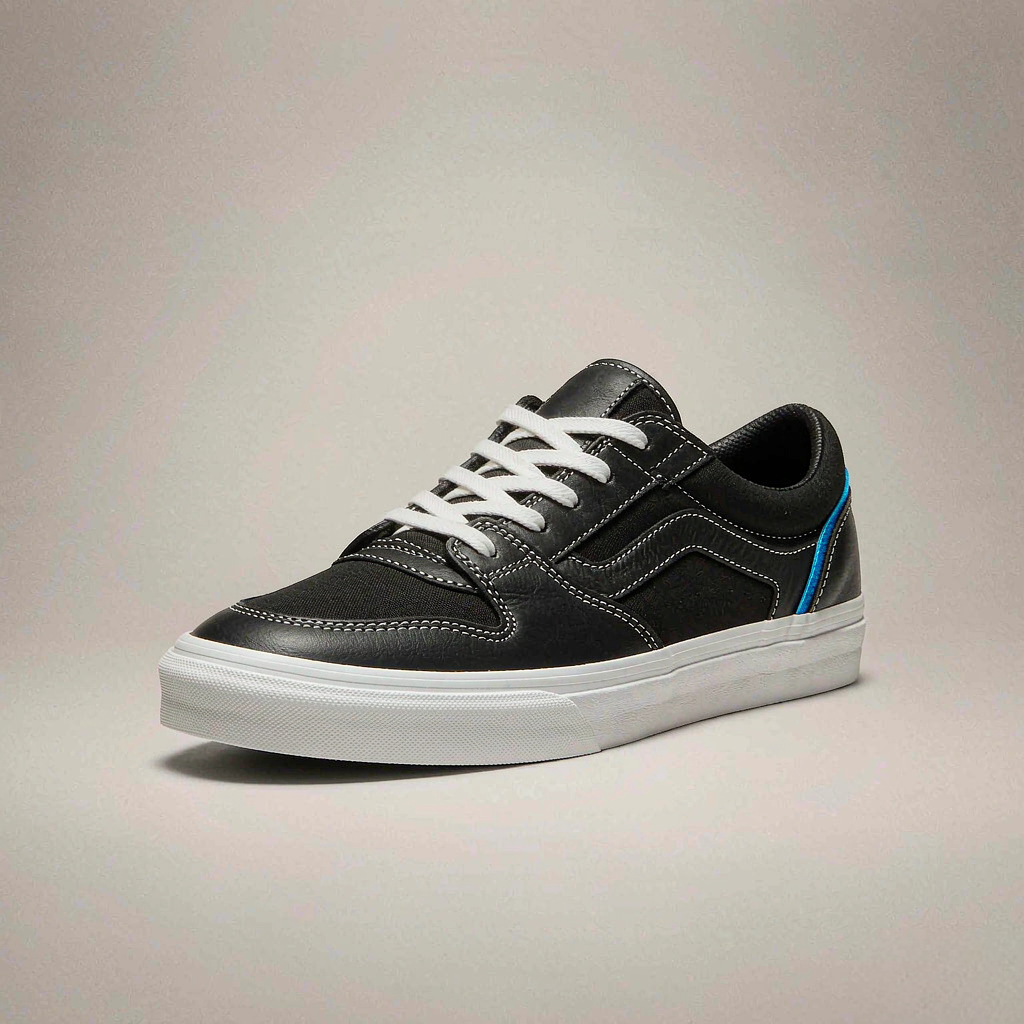
Chunky to Slim and Back: Silhouette Cycles and Timing Your Sneaker Launch
Every few seasons, the sneaker conversation flips. Chunky soles start to read stale, slim retro runners take over the feeds, and the pendulum begins swinging back toward volume — or somewhere new entirely. Sneaker silhouette trends are not random, and they are not purely a creative matter either. They follow a cycle with visible signals, and independent streetwear brands that learn to read those signals can time their development instead of chasing the market.
This piece walks through the logic of the silhouette pendulum, the lag between trend time and development time, and a practical framework for deciding what to build now, what to hold, and what to anchor your line on.
The Pendulum: How Silhouettes Swing From Chunky to Slim and Back
Look at footwear over the past decade and you can trace one full arc. In the mid-2010s, chunky "dad shoe" proportions — layered midsoles, oversized tooling, deliberately clunky volumes — moved from a niche revival to the default statement sneaker. The wave spread from boutiques and runway-adjacent drops down to every price tier, until chunky stopped being a statement and became the background.
That saturation is what drained it. When everyone owns the same exaggerated shape, the shape stops saying anything. The reaction came from the opposite extreme: low-profile, slim retro runners and clean court shapes took over, first among tastemakers, then everywhere.
The pattern is now repeating. In many markets slim has itself become the uniform, and attention is drifting again — toward trail and outdoor cues, aggressive tread, technical panels, and hybrid builds — while slim bases pick up statement finishes to stay fresh.
Two lessons matter for an independent brand. First, these shapes rarely die: chunky did not disappear, it settled into the background of the assortment. Second, waves overlap — a new silhouette rises while the old one is still saturating.
Why Sneaker Silhouette Trends Swing at All
Three forces keep the pendulum moving.
Aesthetic fatigue. Repetition drains novelty. A silhouette that reads fresh in its first season reads default by its third. The easiest way for a designer — or a consumer dressing for a photo — to signal taste is to move toward the opposite extreme. That reflex converts saturation into reversal.
The nostalgia loop. Fashion runs on long generational swings. What felt current when today's tastemakers were teenagers comes back once enough distance has passed for it to feel new rather than dated. Slim retro runners, court classics, and technical styles have gone in and out of favor many times over the decades — revivals are reborn through nostalgia, not invented from scratch.
The transmission chain. Silhouettes travel from runways and editorial shoots to street style, then to social feeds, then to fast fashion, then to mass retail. Each hop widens reach and drains scarcity. By the time a shape is available in every price tier, the people who started the wave have already moved on — which is exactly what triggers the next swing.
The Lag Problem: Your Development Clock Runs Behind the Trend Clock
Here is the part that trips up most independent brands. Sneaker development is slow, and it is slow by design, not because anyone is doing it wrong.
A realistic chain looks like this: concept and tech pack development, factory matching, one or more sampling rounds with revisions, bulk production, inspection, and shipping. Sampling commonly takes weeks per round, and complex constructions take more rounds. Bulk production runs from several weeks to a couple of months depending on complexity and the factory's season. Add shipping, and the journey from a sketch on your desk to stock you can sell is measured in months — often most of a year.
Now line that up against how trends become visible. Consumers discover a silhouette when it ships, which means the production wave behind it is already finished. By the time "everyone" agrees a trend is happening, the brands that started it are booking follow-up production for next season, and low-cost copies are weeks from market.
That lag creates two classic failure modes. The first is entering at peak: you see the trend, you start development, and you launch into saturation and markdowns. The second is thrashing: you cancel sound development halfway because a newer trend appeared, and you end up with no product and no position in either wave.
The way out is not a faster crystal ball. It is judging the wave's stage before you commit, and structuring development so decisions stay reversible at defined checkpoints.
Reading the Cycle: A Lifecycle Framework You Can Actually Use
Estimating where a silhouette sits is the core skill of reading sneaker silhouette trends. Think of every shape as moving through six stages: emerging, rising, peak, saturation, decline, then dormancy until a nostalgic revival. You do not need insider data to estimate the stage. Four signals do most of the work:
Distribution breadth. Which price tiers carry it? Boutique-only suggests emerging or rising; every price tier suggests saturation.
Discount depth. Routine deep discounting at major retailers signals a wave past its peak.
Who wears it. Tastemakers and niche communities first; everyone's feed last.
Innovation direction. Fresh construction and proportion updates suggest a living wave; colorway-only rotation suggests the shape is coasting.
Apply those signals and you get a judgment like this:
Silhouette direction | Signals to read | Likely stage | Development move |
|---|---|---|---|
Chunky, maximal tooling | In every price tier; routine deep discounting; colorway-only updates | Late cycle: saturation to decline | Not a trend entry. If your audience still buys it, treat it as a steady seller refreshed through materials and palette. |
Slim retro low-top runners | Ubiquitous at retail; heavy colorway rotation; but strong staple demand | Broad saturation, with evergreen roots | Build as an evergreen base, differentiated on last, materials, and palette. Do not market it as "the new thing." |
Outdoor and trail cues: aggressive tread, technical panels, hybrid builds | Growing editorial and boutique presence; fewer mass-tier copies | Visible rising wave | The clearest mid-cycle window: sample now, keep bulk sized to confirmed demand. |
Court and basketball mid- and high-cuts | Retro reissue interest and vintage chatter; low current penetration | Revival candidate; timing uncertain | Hold as a small capsule concept. Avoid major tooling spend until the signals firm up. |
One caution: this is a judgment method, not a forecast. Your market can run out of phase with global commentary — a silhouette can look late-cycle internationally and still be early in your region or your specific audience. Your own sell-through is the final signal, and it outranks any trend report, including this framework.
Evergreen Foundations and Trend Capsules: Build a Two-Speed Line
The brands that survive several cycles tend to run two speeds at once.
Evergreen foundations. A clean low-top court shoe, a simple retro runner, a basic suede or canvas low-top — shapes that sell across cycles regardless of what the pendulum is doing. These carry your cash flow and give your factories predictable repeat orders, which quietly improves your standing when you need capacity for something urgent.
Trend capsules. The bets. Smaller runs, lighter tooling commitments, a faster sampling cadence, and a clear exit plan if the wave dies before your shipment lands.
The logic is portfolio management, not trend prediction. The evergreen core funds the experiments, and a missed capsule becomes an inventory lesson instead of a liquidity crisis. For most independent brands, the core should carry the line and the capsules should carry the risk. What you want to avoid is the reverse: an entire line built on a single read of trend timing.
Timing Your Development Calendar
Once you know what to build, the planning question flips. Do not ask "when will the trend arrive?" Ask: "when do I need to start so the product lands where I want in the wave?"
Work backward from your target launch season:
1. Fix the launch month.
2. Subtract shipping and export time.
3. Subtract bulk production time.
4. Subtract final sample approval.
5. Subtract one or more sampling rounds with revisions.
6. Subtract tech pack development and factory matching.
The date you land on is when the trend judgment actually has to be made — usually months before the trend is visible to consumers. Set kill-or-continue gates at each sampling round and agree in advance on what evidence moves the project forward, so a mid-development trend shift leads to a controlled decision rather than a panic.
A practical rule for small brands: when a silhouette reads as clearly rising, you are already too late for the front of the wave. Aim to land in its middle — after demand is proven, before saturation and discounting set in. For an independent label, the middle of a wave is usually the healthiest place to sell.
This is exactly how we work with brands at GlobalSala, a footwear development and manufacturing partner based in Quanzhou, Fujian. We run the full chain — concept refinement, tech packs, factory matching across the Quanzhou and Jinjiang belt, sampling follow-up, bulk production management, item-by-item pre-shipment inspection, and export handling — so your launch date and your development gates are planned together instead of discovered along the way. For a closer look at how the region works, see our guide to sneaker manufacturing in Quanzhou and our overview of Quanzhou shoe manufacturers.
FAQ
How long does a sneaker silhouette trend usually last? There is no fixed clock. Individual waves often run across multiple seasons, and full pendulum swings take years. Judge the stage by distribution breadth and discount depth, not by counting months from a trend's first headline.
What MOQ should I plan for a trend-driven capsule? It depends on the product and the factory. As we tell brands: "MOQs depend on the product and factory. Tell us what you need and we confirm what is realistic before you commit to anything." Right-size the run to your sell-through confidence, not to the hype cycle.
Which silhouettes should a new streetwear brand start with? Anchor the line in evergreens — a clean low-top court shoe or a simple retro runner — and add one trend capsule. The evergreen core trains your development pipeline and carries cash flow while the capsule tests your read on the cycle.
When is the right moment to start sampling for a rising silhouette? When the signals say rising, not peak. Work backward from a target launch season and accept that you will land mid-wave. For a small brand, the middle of a wave is usually a healthier place to sell than its front.
