
Industry Insights
Sneaker Trends 2027: The Silhouettes and Tech Streetwear Brands Are Developing Now
Sneaker trends 2027: silhouettes, foams, and colors streetwear brands should be developing now.
Sneaker Trends 2027: The Silhouettes and Tech Streetwear Brands Are Developing Now
If your brand plans to drop sneakers in 2027, the decisions that shape those shoes are being made right now. Sneaker trends 2027 are already visible on runways, in drop calendars, and across street style — and the direction is clear after two seasons of swing from chunky back toward clean. But a moodboard is not a product. What matters for a brand owner is what each trend does to your last, your molds, your material sourcing, and your minimum order quantities. Here is the read from the development side of the table, where trends either become products or die in a sample room.
The Silhouette Shift: Low Profiles Lead, Retro Runners Hold, Trail Creeps In
The macro move is away from bulk. Slim, low-profile silhouettes with wafer-thin soles have been widely seen on runways and drop calendars, and stylists keep reaching for them because they read as considered rather than loud.
Three directions matter most for an independent brand's line plan:
Retro runners stay the backbone. Vintage-inspired mesh-and-suede runners continue to hold top billing, now in richer, moodier palettes, with performance running shapes crossing fully into everyday wear.
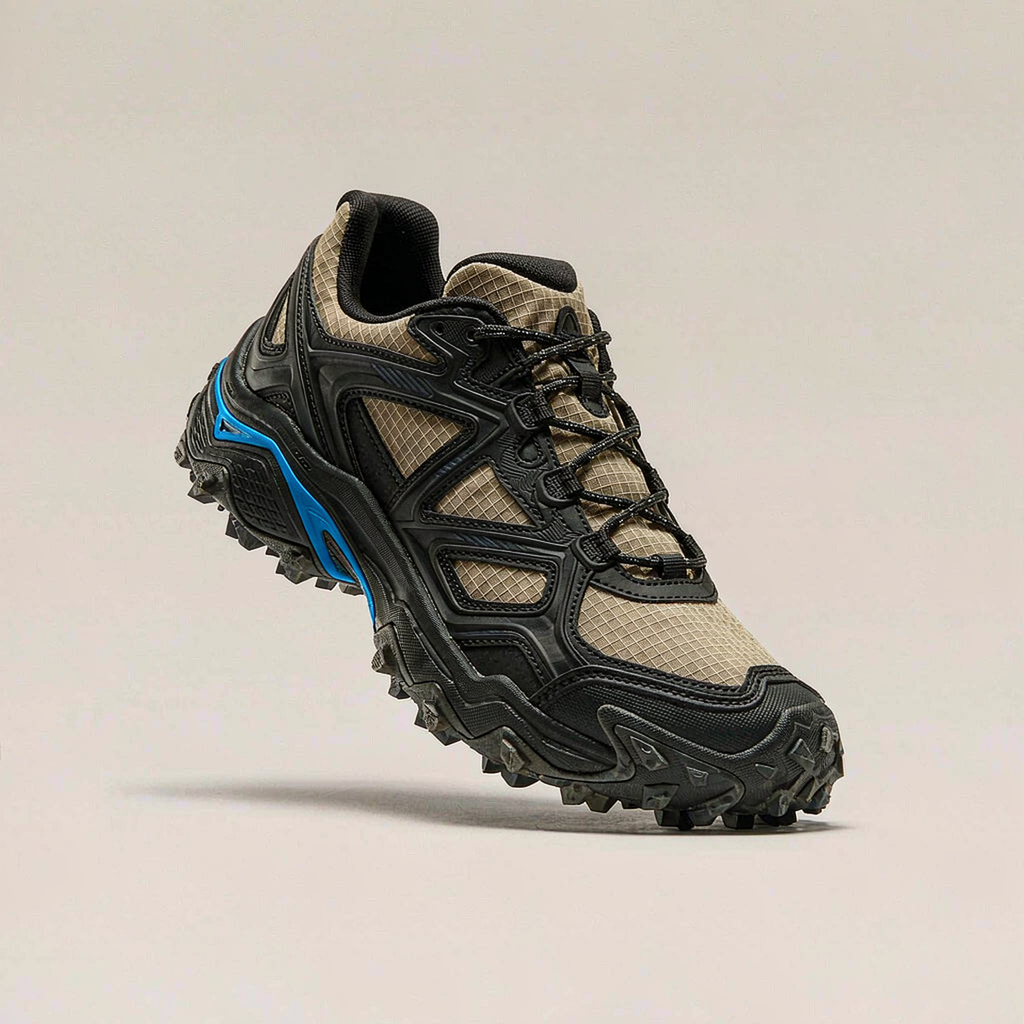
Trail DNA keeps spreading. Lugged outsoles, protective overlays, and technical lacing keep moving into daily rotation through hybrid styles that work on pavement, not just on paths.
Sleek court and ballet-adjacent shapes are worth watching. Narrow lasts and clean leather uppers fit the same low-profile mood, and they pair easily with the tailored side of streetwear.
None of this kills comfort. It raises the bar for it: a thin sole has nowhere to hide a bad compound.
Materials and Tech: The Keywords Your 2027 Briefs Need
Trends are easy to sketch and hard to build. These are the material and tech keywords that will carry real weight in 2027 development cycles:
Engineered knits, iterated. One-piece knit uppers — the construction major running brands made mainstream in the 2010s — keep evolving: finer gauges, seamless collar construction, structural yarns, and recycled yarn options that no longer read as a compromise.
Midsole feel as the selling point. Supercritical foams, popularized through performance running, are now the reference point shoppers use to describe ride: plush, responsive, or somewhere in between. Even a thin-soled design needs a tuned compound, because a slim profile amplifies every flaw.
Sustainability as a spec, not a slogan. Recycled knits, plant-based leather alternatives, and bio-based foam inputs are moving into mainstream line sheets. The catch: any claim you print on the shoe needs documentation from your supply chain, so source the story and the material together.
Notice the pattern. Shoppers increasingly buy how a shoe feels and what it stands for, not just how it photographs.
Colorways and Collab Logic for 2027
Color is where trends show up first and fade first. For 2027 cycles, the palette talk centers on deep browns and chocolate suede, muted earth tones, and off-greys, with metallic silver used as an accent rather than a theme — and the occasional loud pop saved for drop-day energy.
The collab logic is shifting too. The logo-slap playbook is wearing thin; brands are treating collaborations as design exercises with a real story — niche communities, artists, local scenes — or skipping external partners and building their own signature details in-house. For an independent brand, that is the encouraging part: an ownable design idea now beats a rented name.
Sneaker Trends 2027: What Each Shift Means on the Factory Floor
Here is the part most trend reports skip. Every aesthetic shift becomes a technical decision, and every technical decision has a lead time. Map the trends to the development work they trigger:
Trend | What it changes on the development side | Time window |
|---|---|---|
Low-profile, thin-soled silhouettes | New outsole molds — you cannot tool down a chunky sole. Sleeker lasts and foam compounds tuned for thinner geometry. | Mold work is the long pole. Start roughly a year out from launch. |
Retro running revival | Mixed-material uppers — mesh with suede overlays — vintage-leaning palettes, classic outsole patterns. | Sample now for SS27. |
Trail-inspired hybrids | Deeper lug patterns, protective overlays, water-repellent finishes, lace hardware. | New tooling again. Start now for FW27. |
Knit upper iterations | Gauge selection, collar construction, yarn sourcing, size-grade consistency. | Lock yarn early; yarn minimums gate small runs. |
Foam feel upgrades | Compound selection, midsole geometry, ride and hand-feel sign-off on physical samples. | Run compound trials in parallel with upper development. |
Sustainable materials | Documentation behind every claim, longer lead times on some inputs. | Lock materials before colorway sign-off. |
Read the right-hand column as a calendar. If a trend needs new tooling, the brand that starts earliest owns the drop window.
How Trends Pull on MOQs, Lasts, and Molds
Trends do not just change what you design. They change what a factory can realistically say yes to at your volume.
Molds are the big fixed cost. A shift to low-profile soles or deep-lug trail patterns means new outsole tooling, and tooling only makes sense at a volume that justifies it. Lasts come next: sleeker silhouettes need lasts that match, and grading them across your size run is skilled work. Then come material minimums — yarn lots, foam compounds, custom-colored suede — where small brands feel the squeeze first.
So ask about MOQs early, per style, not in general. As we put it: "MOQs depend on the product and factory. Tell us what you need and we confirm what is realistic before you commit to anything." A realistic answer depends on matching the right factory to the right construction — which is what a sourcing partner inside the Quanzhou shoe manufacturing belt does every day, and why MOQ questions in Jinjiang rarely have a one-line answer.
Turning Trends into a Development Brief
Trends tell you what to design. A brief tells the factory what to build. Before you talk to anyone about 2027, get your brief to roughly this level:
Silhouette references and the profile you are aiming for
Last direction and fit notes, including sizing quirks you want to avoid
Material callouts: upper construction, midsole feel, outsole pattern, finish specs
Colorway codes, including seasonal accents
Target cost band and launch window
This is the work we do every day. GlobalSala is a footwear development and manufacturing partner based in Quanzhou, Fujian, working inside the Quanzhou–Jinjiang sports shoe industrial belt. We support the full cycle: landing a concept, building tech packs, matching your project with the right factory in the belt, following samples until they are right, managing bulk production, hand-inspecting piece by piece before shipment against criteria agreed with your supplier — AQL, if/when agreed between buyer and supplier — and handling export affairs. You can see how we approach sneaker projects in Quanzhou sneaker manufacturing.
The 2027 window is open now. Brands that treat trends as development inputs, not just moodboard decoration, will be the ones with product ready when the season turns.
FAQ
When should I start developing sneakers for a 2027 launch?
Earlier than feels comfortable. A realistic cycle runs from brief and last selection through sampling, tooling, bulk production, and shipping. If your launch window is 2027, the brief and factory conversations belong right now, so samples and molds have room to breathe.
Are thin soles a phase or a real shift?
Several seasons of momentum across runways, retail, and street style suggest more than a blip. The practical answer: design for your community first. If slim profiles fit your line, note that they demand better foam tuning and cleaner finishing — a development challenge, not just a styling one.
How do sneaker trends affect my MOQ?
Through tooling and materials. Trend-led details like new outsole molds or specialty yarns push minimums up; simpler constructions on existing tooling keep them down. MOQs depend on the product and factory, so confirm per style before you commit.
What trend keywords should go into a tech pack?
Translate aesthetics into specs: knit gauge and collar construction, midsole compound and target ride feel, outsole lug pattern, last shape, colorway codes, and finish or hardware details. Vague trend words do not survive contact with a sample room.
