
Industry Insights
Knit Uppers, Bio-Foam, Recycled Rubber: Sustainable Sneaker Materials You Can Actually Source
A factory-side guide to sustainable sneaker materials: what you can source and what to document.
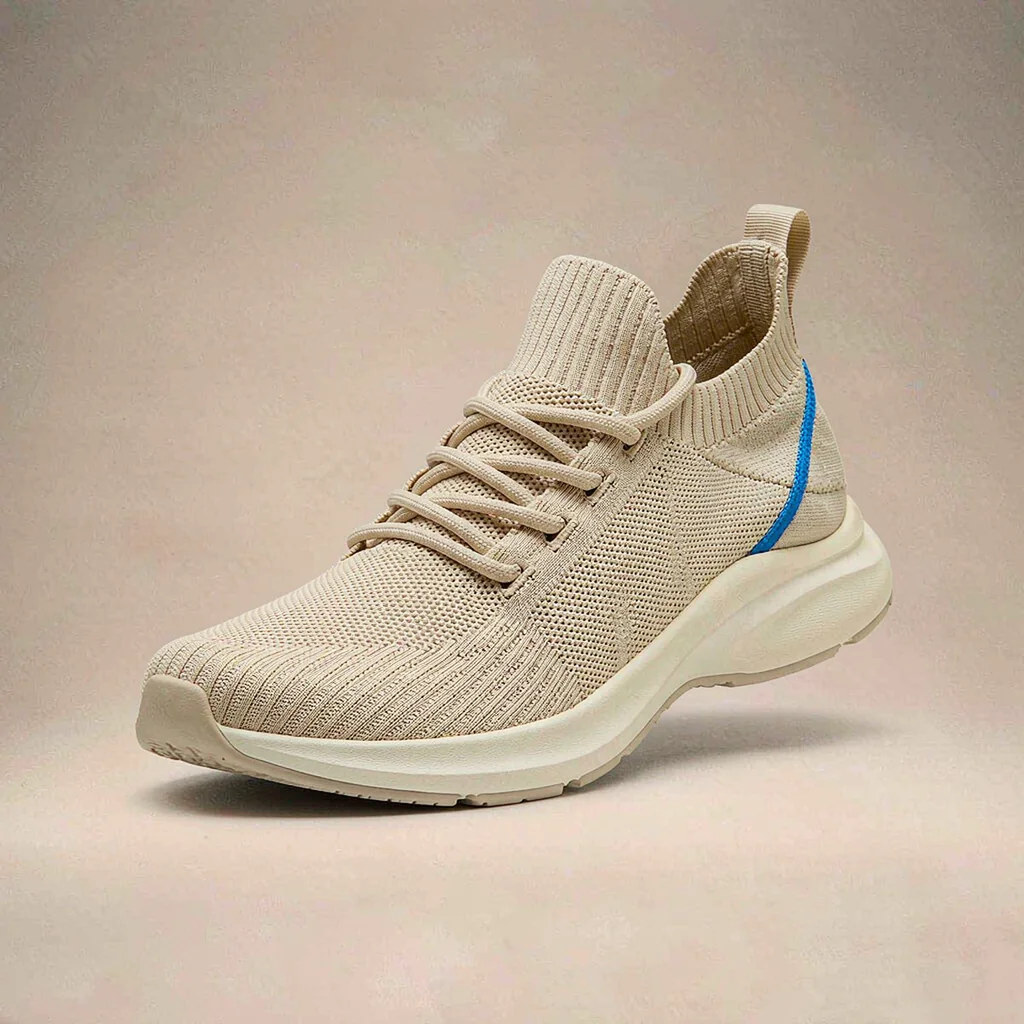
Knit Uppers, Bio-Foam, Recycled Rubber: Sustainable Sneaker Materials You Can Actually Source
Sooner or later, a customer picks up your sneaker and asks the question: is this sustainable? If your answer is a shrug, you lose credibility. If your answer is borrowed marketing copy, you risk something worse — getting called out for a claim you can't back.
This guide to sustainable sneaker materials is written from the factory side, not the brand side. It covers what you can realistically source in a manufacturing hub like Quanzhou: recycled knit uppers, bio-based and recycled foam midsoles, recycled rubber outsoles, and lower-solvent adhesive processes. For each one, we look at supply maturity, cost and MOQ impact, and what the material can — and cannot — honestly say for your brand.
One principle runs through all of it: a sustainability story is only as strong as the documentation behind it.
What Are Sustainable Sneaker Materials, Really?
On a factory floor, "sustainable" is not a vibe. It's a supply chain fact: which material came from which supplier, in what percentage, with what paperwork.
Four areas of a sneaker carry most of the story:
The upper — where recycled polyester and engineered knits live
The midsole — where bio-based and recycled foams live
The outsole — where recycled rubber lives
The bonding — where solvent use lives
None of these makes a shoe "eco-friendly" on its own, and nothing in this article should be pasted into your marketing. What they make possible is a specific, provable statement: this upper uses recycled polyester, this midsole contains a bio-based share, this outsole is built with production scrap. The rest of this article is about statements like those — and about keeping the receipts that let them survive questioning.
Recycled Knit and Polyester Uppers
What it is. Engineered knit uppers made with recycled polyester (rPET), most commonly yarn re-spun from used PET bottles, often blended with a little elastane for stretch.
Supply maturity. The deepest of the four categories. Knit uppers are a core specialty of the Fujian coast, and recycled polyester yarn is a standard catalog item at major yarn suppliers, usually with certification options available. Those certifications are recycled-content standards of the GRS type — verify the actual certificate with the supplier, not the brochure.
Cost and MOQ. The yarn premium over virgin polyester is usually modest. The real constraint is minimums: a recycled yarn in your exact color and denier can carry a higher MOQ than virgin stock, and certified yarn adds another layer. Stock colors ride existing lots. Custom colors commit you to a dye run.
Narrative value and trade-offs. The bottle story — this many bottles per pair — is the claim consumers grasp quickest, and exactly the claim that needs paperwork behind it. Two honest trade-offs: elastane improves fit but complicates any end-of-life story, so don't call the shoe recyclable. And knit is knitted close to shape, which typically generates fewer offcuts than cutting panels from sheet material — a real production fact, but a process detail, not a product claim.
Bio-Based and Recycled Foam Midsoles
What it is. EVA is still the workhorse of sneaker midsoles, and two directions build a story into it. Bio-based EVA replaces part of the fossil-derived ethylene with ethylene made from sugarcane ethanol. Recycled EVA grinds production scrap back into new midsoles, often visible as a speckled color.
Supply maturity. High across Fujian. Many midsole factories keep bio-based or recycled compounds in regular rotation — but percentages vary from factory to factory, and there is no default number. There is only what your supplier confirms in writing.
Cost and MOQ. Riding a factory's existing compound is the cheap path: little premium, low minimums. Commissioning a custom blend is different — foam compounds have their own MOQs, and a custom color or percentage can lock you into volumes a first order can't justify.
Narrative value and trade-offs. This is where durability gets real. Bio-based foams at higher replacement ratios can behave differently from conventional EVA — in hardness, in rebound, and in how they age. Recycled scrap shifts shade from batch to batch. Both are manageable if you check feel and performance against your spec during sampling and lock a reference sample. What isn't manageable is a vague "eco-foam" label with no percentage behind it. Agree the number in writing before tooling starts.
Recycled Rubber Outsoles and Solvent-Free Adhesives
Outsoles. The common route is post-industrial regrind: rubber scrap from production, ground and mixed back into new outsole compounds. Supply is abundant in Fujian — plenty of outsole factories already run regrind blends, sometimes for cost reasons before sustainability ever comes up. Ratios vary by factory, so ask for the number. The trade-off: pushing recycled content high can affect grip and abrasion life, which makes this a conversation with your developer, not a checkbox. Post-consumer rubber such as tire crumb exists, but consistency issues make it the harder option for performance outsoles.
Adhesives. Solvent-based cementing is where VOC emissions live in sneaker assembly. Water-based and hot-melt alternatives have been spreading through assembly lines, including in Fujian, but availability depends on the factory and the construction. Watch the framing: this is a factory-process claim, not a product-material claim. "Our partner factory runs water-based cementing on this line" can be true. "This shoe is non-toxic" is a different sentence, and not one to write casually.
Materials Compared: Maturity, Cost, and Development Notes
Material | Supply maturity in Fujian | Cost and MOQ impact | Development notes |
|---|---|---|---|
Recycled polyester knit upper | Very high | Modest yarn premium; recycled and certified yarns can carry higher MOQs than stock virgin | Confirm recycled content percentage and certificate type with the yarn supplier; watch the elastane share |
Bio-based EVA midsole | High | Small premium on existing compounds; custom blends carry compound MOQs | Agree the bio-based percentage in writing; check feel and aging behavior in sampling |
Recycled EVA (scrap) midsole | High | Often cost-neutral | Speckle shifts batch to batch; lock a reference sample |
Recycled rubber outsole | Very high | Often cost-neutral | High recycled ratios can affect grip and abrasion; confirm the ratio |
Water-based cementing | Growing | No material premium; a process change for the factory | Confirm with the factory per construction before claiming it |
Treat this as the agenda for your first material conversation, not a shopping list. Every cell is a question to put to a specific supplier.
Making Claims That Survive Supply Chain Scrutiny
Here's the uncomfortable part: the materials are rarely the problem. The paperwork is. A claim fails not because recycled polyester doesn't exist, but because nobody kept records of where it came from.
Collect documentation during development, while it costs you nothing extra:
The yarn supplier's recycled-content declaration — percentage and source material
Transaction certificates, if the content is certified (GRS-type standards work through chain-of-custody documentation at each production stage — verify the certificate itself with the supplier)
The compound percentage for any bio-based or recycled midsole and outsole material, confirmed by the factory in writing
Factory confirmation for any process claim, such as water-based cementing
Mind the chain-of-custody gap. Certified yarn entering a factory does not automatically make the finished shoe certified — certification bodies expect every stage that handles the material to hold certification and reconcile volumes. Ask how it carries through cutting, stitching, and assembly. If it doesn't carry all the way through, claim the material — "upper made with certified recycled polyester" — not the shoe.
Keep the discipline symmetrical: if you mention FSC-type paper sourcing for your packaging, verify that certificate too. A claim you can't document isn't a claim; it's a liability with good branding. And when something can't be documented, say so. A brand that explains its trade-offs is harder to call out than a brand that overclaims.
Sourcing Sustainable Materials in Quanzhou
The Quanzhou–Jinjiang cluster concentrates knit uppers, midsole compounds, outsole molds, and full assembly within a short drive of each other. For sustainable materials specifically, that density matters: you can visit the yarn vendor, walk the midsole line, and collect supplier confirmations in days rather than weeks. Our guide to sneaker manufacturing in Quanzhou covers how production works on the ground here.
Access to materials, though, is not the same as access to documented materials. What a development partner adds is the unglamorous part: confirming which recycled inputs are actually in stock, at what minimums, with what documentation — before you commit to anything.
On MOQs, our position is simple:
MOQs depend on the product and factory. Tell us what you need and we confirm what is realistic before you commit to anything.
If you want the mechanics behind that, we've written about how MOQs get set in Jinjiang.
That's the work we do at GlobalSala, a footwear development and manufacturing partner based in Quanzhou. The scope runs from concept and spec sheets through factory matching, sampling follow-up, production management, piece-by-piece pre-shipment inspection, and export handling. If you're mapping materials for your first sustainable style, start at our footwear sourcing page. Bring the shoe you want to make. We'll tell you what's realistic.
FAQ
What materials make a sneaker more sustainable? The sourceable categories today are recycled polyester uppers, bio-based or recycled foam midsoles, recycled rubber outsoles, and lower-solvent adhesives. Maturity differs by category, and every percentage needs supplier confirmation before it goes on a hangtag.
Does recycled polyester actually make a difference? It reuses existing PET instead of drawing new fossil feedstock — that's the substance of the story. It becomes a claim only with documentation: get the percentage and certificate status from the yarn supplier, and verify the certificate before repeating it.
Do sustainable sneaker materials increase MOQs? Often, yes. Recycled yarns and custom foam blends usually carry higher minimums than stock virgin materials. The workaround is riding a factory's existing compound or colorway first, then customizing once volumes justify it.
How do I avoid greenwashing accusations? Claim only what you can document: percentages confirmed in writing by suppliers, certificates verified with the issuer, process claims confirmed by the factory doing the work. If something can't be documented, describe the trade-off honestly instead.
