
Industry Insights
Tote Bag Development: From Flat Pattern to Production Run
A tote looks like the simplest bag to make — and the pattern work proves otherwise. How tote bag development runs from flat pattern to a production-ready sample.
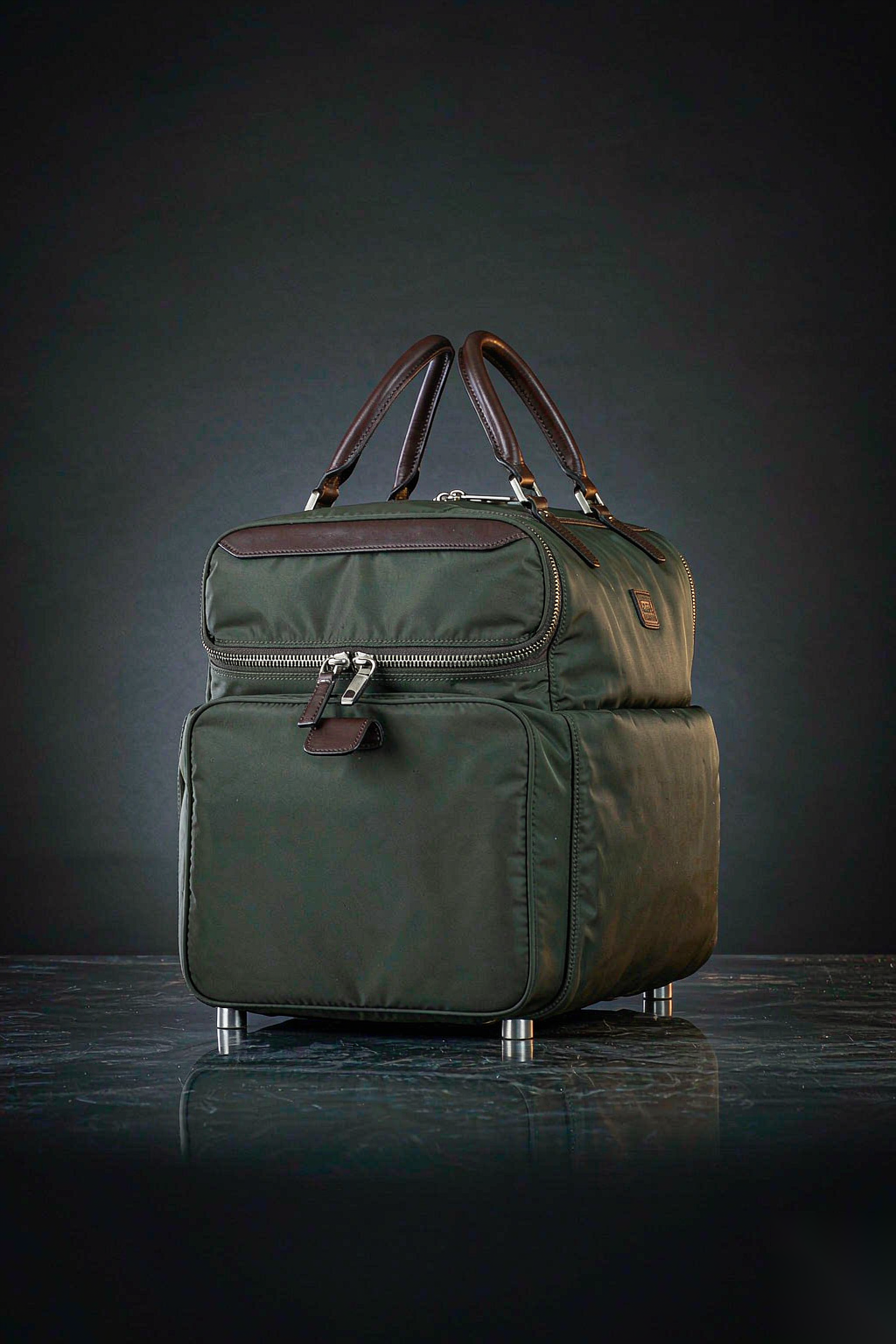
A tote bag looks like the simplest product in the bag category: two panels, two handles, one seam family. Buyers pick totes as their first development project for exactly that reason — and then discover that the flat pattern stage, the handle anchoring, and the fabric decision carry more engineering than the silhouette suggests. Tote bag development rewards brands that respect those three stages. Here is how the development actually runs, from the first pattern draft to a production-ready sample.
Why the Flat Pattern Decides Everything
Unlike a backpack (three-dimensional from the start) or a duffel (built around a cylinder), a tote begins as a flat pattern — and the pattern IS the design. Three pattern decisions shape everything downstream:
Gusset style. No gusset (fully flat), side gusset (2D plus depth panels), or full box gusset (a third panel wrapping the base). The gusset decides how much the tote stands up on its own and how much volume the same fabric yields.
Base width. A wider base reads as stable and premium but costs fabric and changes the handle angle.
Top edge construction. Folded hem, bound edge, or a top zipper panel — the edge finishes the bag's whole look and anchors the handle roots.
A pattern change at sample stage costs a redraw. A pattern change after bulk costs the run. That asymmetry is why serious development spends its time here, at the flattest and cheapest stage.
The Handle Decision: Anchoring Is the Product
Tote handles fail at their anchors, not along their length. The development questions:
1. Attachment geometry. Handles that wrap the base (continuous loop) distribute load through the whole bag; handles that anchor at the top edge concentrate load at four points and need reinforcement there.
2. Anchor reinforcement. An X-box stitch or bar-tack at each anchor point, backed by an internal patch, is standard for bags that will carry real weight.
3. Handle drop. The distance from the bag's top edge to the handle's peak decides whether the tote fits over a shoulder. Shoulder-carry totes need a drop above roughly twenty-five centimeters; hand-carry totes can go shorter. Get this wrong and the bag photographs well but fails the daily-use test.
This is the same load-anchoring logic that governs backpack straps — our guide to backpack development specs covers the reinforcement details in depth, and they transfer directly.
The Fabric Decision: Hand, Weight, and the Finish
The fabric family sets the tote's price class and its printing surface. Three practical notes from the development floor:
Canvas weight is a range, not a number. "Canvas" spans light eight-ounce cotton to heavy eighteens. The weight decides the bag's stand, its handle-load tolerance, and its printing behavior. Spec the ounces, not the word.
Coatings change everything. A PU coating on the inside turns a cotton tote into a water-resistant carrier — and changes how it creases. Decide coated or uncoated before sampling, not after.
Recycled polyester prints cleaner. For brands whose tote is a promotional or retail piece with heavy graphics, rPET takes screen print and heat transfer more crisply than cotton — at a friendlier weight.
MOQs depend on the product and factory. Tell us what you need and we confirm what is realistic before you commit to anything. Tote MOQs are among the friendliest in the bag category, but fabric minimums and printing setup still shape the floor — knowable before you commit, from the factory rather than a chart.
Sampling: What the First Prototype Will Tell You
The first tote sample answers four questions that no drawing can:
1. Stand. Does the bag stand on its own with the chosen gusset and base, empty and loaded?
2. Handle angle. With a realistic load, do the handles stand upright (premium read) or flop outward (budget read)?
3. Seam behavior. Where the gusset meets the base, does the fabric pucker or pull?
4. Print registration. If the design carries graphics, does the print sit square to the panels after sewing?
Each question maps to a pattern or spec adjustment. One correction round typically lands the second sample at production quality — for a tote, two rounds is a disciplined program, not a slow one.
Production Notes: The Details That Show Up in Bulk
Bulk tote production concentrates risk in three places: cutting (fabric utilization — a pattern that nests poorly wastes material), handle sewing (the labor bottleneck), and finishing (thread trims and corner shaping). A factory matched to volume tote work manages all three; a generalist shop quoting your first tote may not. Our Quanzhou bag sourcing guide covers how the cluster's specialists are organized and why the match matters.
The QC focus at bulk mirrors the sample review: handle anchor strength, seam straightness at the gusset junctions, and print consistency across the run. Our development pipeline runs the same inspection standard on totes as on backpacks and footwear — the categories differ, the discipline does not.
Frequently Asked Questions
How many correction rounds should a tote need?
One, if the spec sheet was written before sampling. Two if the first round reveals a pattern-level change. More than two usually means the spec was incomplete at the start.
What is the most common tote quality complaint?
Handle anchors — followed closely by print misregistration. Both are visible at the sample stage and both are cheap to fix there.
Can I mix materials in one tote order?
Yes — canvas body with leather trim, or rPET body with cotton webbing handles, are common. Mixed materials add a color-matching discipline at development; spec both materials with references.
Is a zipper worth adding to a tote?
A top zipper moves the tote from shopping-bag to day-bag positioning and adds meaningful cost in hardware and sewing time. It is a positioning decision, not a quality upgrade — make it against your market, not against your material budget.
The Takeaway
Tote bag development is flat-pattern engineering with three decision points: the pattern, the handle anchoring, and the fabric. Respect the order — pattern first, sample second, bulk last — and the simplest bag in the category becomes the most reliable first program a brand can run.
