
Industry Insights
Travel Backpack Organization: The Compartment Architecture Buyers Notice
A travel backpack sells on its compartments. The organization architecture — clamshell, book-style, quick-access — that separates travel packs from school bags.
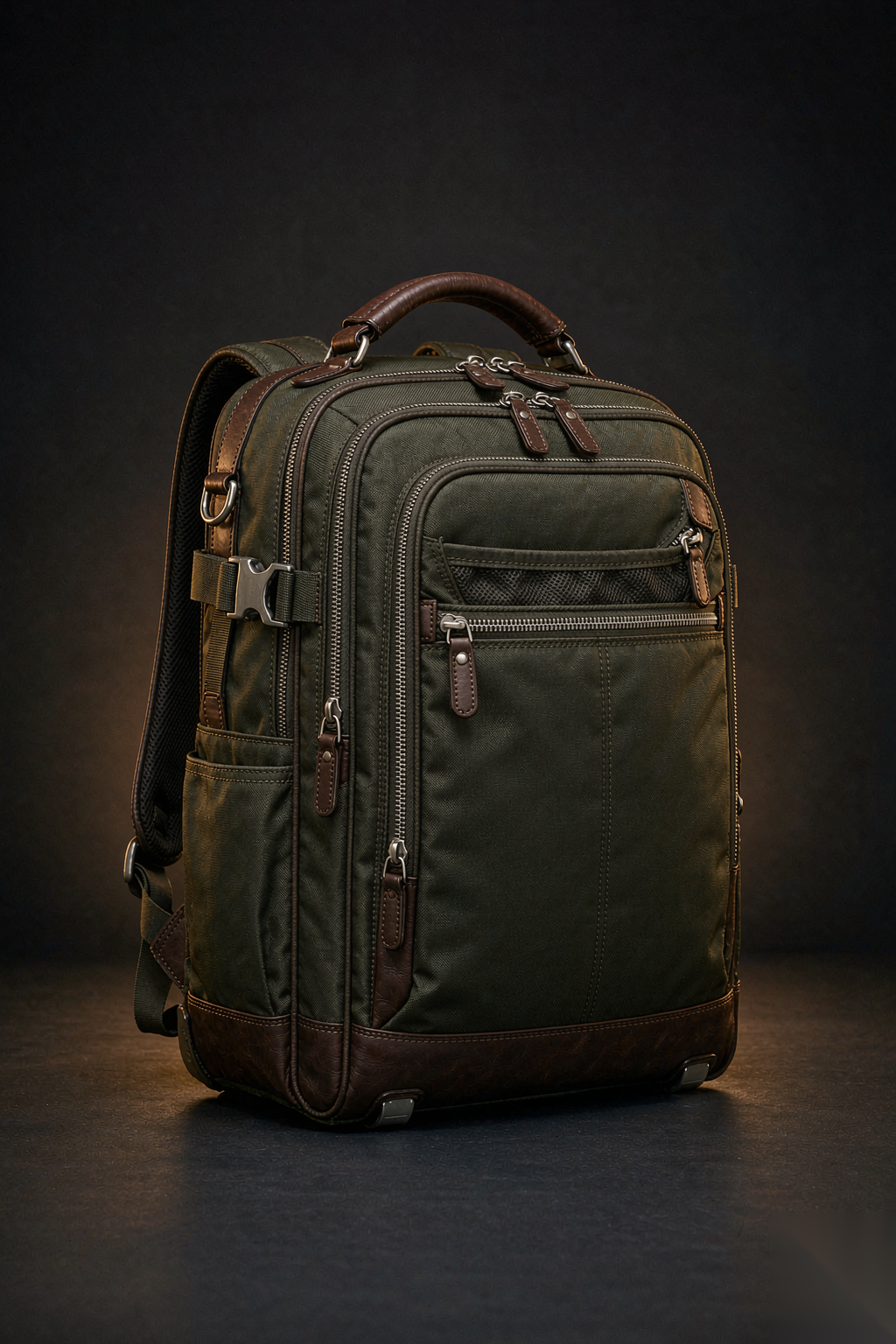
Ask a buyer what they want in a travel backpack and they will list features. Ask them to describe the bag they actually bought last time and they will describe compartments — where the laptop went, where the toiletries lived, which pocket opened at security. Travel backpack organization is the architecture buyers notice, and it is decided in development, not in marketing. Here are the compartment systems that define the category, and the development logic behind each.
The Clamshell: The Travel Pack's Signature
The defining feature of a serious travel backpack is the clamshell opening — the front panel unzips fully so the bag opens like a book, flat. The clamshell changes everything downstream:
Packing style. Cubes stack in layers instead of dropping into a hole. The traveler sees the whole bag at once — in a hotel room and at a hostel bunk at midnight.
The back panel becomes structure. With the front opening, the bag's back panel (the side against the wearer) is the stable surface — the laptop compartment and the main frame live there.
The zipper is structural. A clamshell's zipper runs the entire perimeter and takes the bag's flexing load — it needs the heaviest coil and the most robust slider in the line.
The clamshell's development cost is real: perimeter zippers, dual-panel structure, and the hinge engineering that lets the two halves open flat. It is also the feature that separates a travel pack from a school bag with a luggage tag.
The Layer System: Where Everything Lives
Well-developed travel packs organize in layers, back to front:
Layer | Contents | Access Pattern |
|---|---|---|
Back layer (against wearer) | Laptop, documents, valuables | Security-focused; rarely opened publicly |
Middle layer | Clothing, packing cubes | The clamshell's main cavity |
Front layer | Toiletries, tech organizer, quick items | Frequently opened |
External quick-access | Transit card, water bottle, umbrella | One-handed, worn |
The layer system answers the traveler's real question — what do I need, and when — with architecture. Each layer has a content definition, and every pocket earns its place by serving it. A pocket without a defined content is a development leftover, and buyers feel it as clutter.
Quick-Access: The Feature That Defines Daily Experience
The traveler's day is a sequence of micro-accesses: transit cards at the gate, passports at immigration, water bottles between stations. The quick-access layer is developed around those moments:
Security-height pockets. Placed where a worn pack can be swung to the front — the pocket the user trusts with a passport.
Bottle pockets that survive gates. Elastic or gusseted, positioned clear of zipper paths.
The tech pocket. For chargers and cables — the contents that otherwise live tangled in the main cavity.
Each quick-access point is a stress point for the zipper that serves it: these zippers open dozens of times a day, thousands of times over the bag's life. The hardware spec — heavy sliders, big pulls — follows the access frequency, the same logic our bag hardware guide applies to every category.
The Comfort Layer: Organization Meets Load
Organization sells the bag; comfort keeps it. The travel pack's back structure — ventilation channels, load-transfer padding, the suspension that moves weight to the hips on larger packs — is the layer the wearer feels all day. The compartment architecture and the comfort structure share the same space, and the development tension between them (a rigid back panel protects the laptop but fights ventilation) is exactly what separates well-developed travel packs from assembled features. Our guide to backpack development specs covers the load side in depth.
MOQs depend on the product and factory. Tell us what you need and we confirm what is realistic before you commit to anything. Travel packs carry a construction minimum — the clamshell and the layered structure demand it — and that minimum is knowable before sampling, from the factory floor.
Frequently Asked Questions
Is a clamshell worth the development cost?
For travel packs, yes — it is the single feature buyers name when they describe why a pack works. For commuter-only packs, a top loader with a good laptop compartment can serve at a friendlier cost.
How many compartments is too many?
When a pocket has no defined content. Five purposeful pockets outperform ten decorative ones — and the layer system keeps the count honest by assigning every pocket a job.
Where should the water bottle go?
Outside, clear of every zipper path, gusseted to hold shape when empty. A bottle pocket that intrudes into the main cavity is the most common layout regret in the category.
The Takeaway
Travel backpack organization is architecture: a clamshell that opens the whole bag, layers that match the traveler's day, quick-access placed for real moments, and a comfort structure underneath. Develop the architecture deliberately and the feature list writes itself.
